
 EN
EN



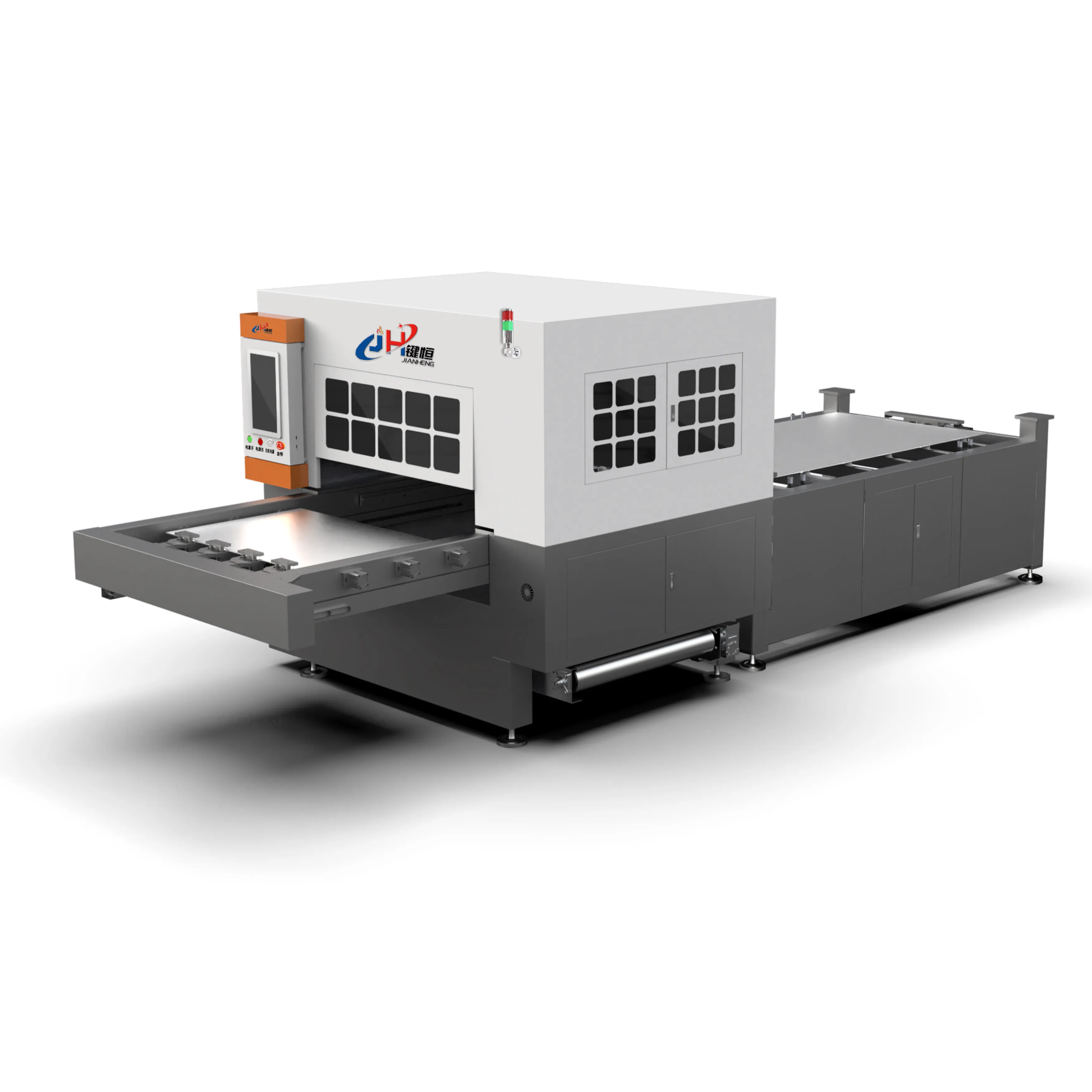
The Role of Automation and Industry 4.0 in Modern Laser Welding Systems
Synergy Between Automatic Laser Welder Systems and Industrial Automation
Laser welding systems have become a key part of modern manufacturing setups, offering far greater accuracy and faster results than what human workers can achieve manually. When connected to robotic arms and moving assembly lines, these machines can run nonstop around the clock while maintaining weld quality within about 1% variance according to recent industry reports from late 2024. The real magic happens through built-in sensors that constantly monitor and tweak things like laser power levels and where exactly the beam focuses on the metal being welded. This kind of smart adjustment cuts down on scrap materials significantly compared to older welding techniques, sometimes saving manufacturers as much as 35% in wasted resources.
Core Components Enabling Integration of Laser Welding into Automated Production Lines
Three key components drive seamless integration:
- Adaptive Motion Controllers: Achieve 0.02mm accuracy in guiding robotic arms
- Multispectral Vision Systems: Detect joint gaps and surface contaminants in real time
- IoT-Ready Control Software: Centralizes parameter management across multiple stations
Together, they allow automatic laser welders to process complex parts—from automotive battery trays to medical microcomponents—without manual recalibration.
Impact of Industry 4.0 on Robotic Laser Welding: IoT, Data Analytics, and Smart Controls
The fourth industrial revolution is really changing how we do laser welding these days. With smart algorithms watching out for things like motor vibrations and when those laser diodes start showing signs of wear, manufacturers are seeing some pretty impressive results. According to recent research from last year, plants that have adopted these AI powered systems can spot defects almost 90% quicker than before, and they experience around 40% less unexpected shutdowns too. The control systems themselves get pretty clever about adjusting parameters as materials come through the line at different thicknesses. And let's not forget about all that thermal imaging data being handled right there on site by edge computing hardware processing upwards of 15 terabytes worth every single shift. This local processing helps save energy and makes everything respond much faster when problems arise.
Boosting Speed and Scalability in High-Volume Manufacturing with Automatic Laser Welding
High-speed operation and reduced cycle times in automated laser welding
Today's automatic laser welders can run at speeds above 30 millimeters per second, which cuts down on cycle times anywhere from half to almost three quarters compared to older methods. The pulsed fiber lasers used in these systems typically spend between 100 and 200 milliseconds on each weld spot, making it possible to handle complex shapes and designs much faster than before. What makes these machines really stand out is their real time temperature tracking system. This feature stops parts from warping even when running at top speed, keeping the quality of the welds consistent throughout an entire work shift with deviations staying below 0.2mm most of the time. For manufacturers dealing with tight tolerances, this kind of precision makes all the difference in production efficiency.
Maximizing production throughput in fast-paced environments
When it comes to speed, robotic material handling combined with AI driven job sequencing lets these automated systems crank out anywhere from 600 to 1,200 parts every single hour. What really makes these operations tick are those dual laser setups that switch tools in under 100 milliseconds, basically cutting out all the downtime between different production runs. Take a look at what happened in 2024 when some major manufacturers started using these technologies. One study found that top tier suppliers managed to boost their monthly production numbers dramatically, going from around 85 thousand units up to over 210 thousand each month. And here's the kicker they did this without needing any additional factory space thanks to those modular laser welding cells that can be added as needed.
Case study: Automotive manufacturing line using high-volume automatic laser welder systems
A leading EV manufacturer achieved a 98.7% first-pass yield on battery tray welds using 12-axis robotic laser systems. Key outcomes include:
- 320 structural joints welded per chassis in 148 seconds—73% faster than prior MIG systems
- 0.15mm positional repeatability maintained across three shifts
- 41% reduction in energy use via optimized beam modulation
This setup reduced labor costs by $18.50 per unit and supports scalable production from 15,000 to 45,000 units/month. Recent research confirms similar installations achieve over 94.3% operational availability globally.
Precision, Consistency, and Quality Control in Robotic Laser Welding
Robotic Arm-Based Laser Welding for Unmatched Weld Consistency
Automatic laser welders equipped with robotic arms deliver around 0.02 mm positioning accuracy, which means they create consistent, high quality weld seams that just aren't possible when someone is doing the welding manually. These systems take out all the guesswork regarding heat control and joint alignment something that matters a lot in places like battery pack manufacturing. After all, even a small 5% variation in penetration depth could lead to complete system failure. When looking at actual numbers from the industry, these fully automated solutions cut down on defects by nearly 98% when compared against semi automatic alternatives according to data published in the 2023 Precision Manufacturing Report.
Real-Time Monitoring and Adaptive Control in Platform Automatic Laser Welding Machines
Integrated sensor arrays perform more than 500 quality checks per second, monitoring critical parameters:
| Parameter | Monitoring Frequency | Tolerance Threshold |
|---|---|---|
| Beam focus position | 200 Hz | ±0.05 mm |
| Shielding gas flow | 100 Hz | ±0.3 L/min |
| Weld pool dynamics | 1000 Hz | ±3% stability |
Using closed-loop feedback, systems automatically adjust settings to maintain ISO 13919-1 Level B quality standards—even with 15% variation in material thickness.
Balancing Speed and Precision in High-Volume Production: Challenges and Solutions
Maintaining sub-0.1 mm accuracy at speeds up to 3 m/min requires synchronization of 7-axis robotics with latency below 1 ms. Leading manufacturers address this with:
- Predictive path planning to compensate for thermal expansion
- Dual-laser configurations alternating cutting and welding tasks
- Machine learning models trained on over one million weld samples
These innovations support 92% first-pass yield at production rates above 120 parts/hour, outperforming traditional resistance welding by a 3:1 margin in complex assemblies.
Key Advantages of Automated Laser Welding Across Industrial Applications
Minimizing Human Error Through Fully Automatic Laser Welder Systems
Automatic welding systems cut down on those pesky inconsistencies that come with human operators because they follow programmed weld paths down to fractions of a millimeter. According to some recent research from last year, these automated setups can slash problems like tiny air pockets or weak spots in welds by around 70% when compared to what people do manually. Plus, taking workers out of dangerous areas where there's intense heat really boosts safety on the job site. And let's face it, nobody wants their employees getting burned just so products meet quality standards. The bonus here is that the same level of good work keeps happening throughout long production runs without all the ups and downs we see with human fatigue factors.
Scalability and Repeatability Benefits for Diverse Manufacturing Sectors
Laser welding systems can handle everything from small batches used in aircraft components all the way up to fast paced car assembly lines where they need to complete more than 1,200 welds every single hour. The same programming templates work consistently across different locations worldwide, so parts made in one factory will fit just as well in another facility half a world away. This matters a lot in tightly controlled sectors such as medical equipment production where consistency is non negotiable. These systems also play nicely with modular setups on the shop floor, letting manufacturers switch between material types or product designs quickly when needed. As custom built products become more common in today's market, this flexibility becomes increasingly valuable for staying competitive without breaking the bank on tooling changes.
Technical Comparison: Robotic vs. Fixed-Platform Automatic Laser Welding Machines
Modern manufacturing demands careful selection between robotic and fixed-platform laser welding systems based on part complexity, volume, and flexibility needs.
Core Architecture of Robotic Laser Welding Systems
The best robotic systems on the market today typically have those six-axis articulated arms working alongside advanced adaptive optics technology. These systems can keep laser beams focused within about 0.02 millimeters even when moving through complex three-dimensional paths. Most modern units come with built-in vision systems for proper alignment plus machine learning capabilities that constantly adjust for any trajectory issues as they happen. This kind of real-time correction has proven to deliver around 99.8 percent reliability specifically in aerospace manufacturing where tolerances are extremely tight. When it comes to connecting these machines into larger factory networks, most manufacturers rely on standard protocols such as OPC UA and MTConnect. These communication standards make it much easier to integrate robotic systems into existing Industry 4.0 infrastructure without major reconfiguration headaches down the line.
Performance, Flexibility, and ROI: Robotic Arm vs. Fixed-Platform Configurations
Key differences highlighted in the 2023 Welding Automation Report:
| Factor | Robotic Systems | Fixed-Platform Systems |
|---|---|---|
| Repositioning Speed | 2.1 m/s ±0.05 | 1.4 m/s (fixed) |
| Application Range | 87% complex geometries | 62% flat/simple components |
| ROI Period | 22 months | 15 months |
| Energy Efficiency | 3.2 kW/hr | 4.1 kW/hr |
Robotic systems cut changeover time by 73% through offline programming, while fixed platforms deliver 0.01mm repeatability ideal for high-volume electronics welding. In mixed-model automotive production, robotic arms achieve 34% higher equipment utilization, offsetting their 28% higher initial cost within three years.
FAQ
What are the main advantages of using automated laser welding systems?
Automated laser welding systems offer improved accuracy, reduced material waste, consistent quality, lower labor costs, and enhanced safety by minimizing human error and operating continuously.
How does Industry 4.0 influence laser welding?
Industry 4.0 integrates IoT, data analytics, and smart control systems into laser welding, leading to faster defect detection, reduced downtime, and more efficient energy use.
What are the benefits of robotic systems over fixed-platform configurations?
Robotic systems provide greater flexibility for complex geometries, faster repositioning speeds, and higher equipment utilization, although they might have a longer ROI period compared to fixed-platform systems.
How do automatic laser welders enhance production throughput?
Automatic laser welders improve throughput by combining AI-driven job sequencing and rapid tool switching to minimize downtime and handle a high volume of parts per hour efficiently.

