
 EN
EN



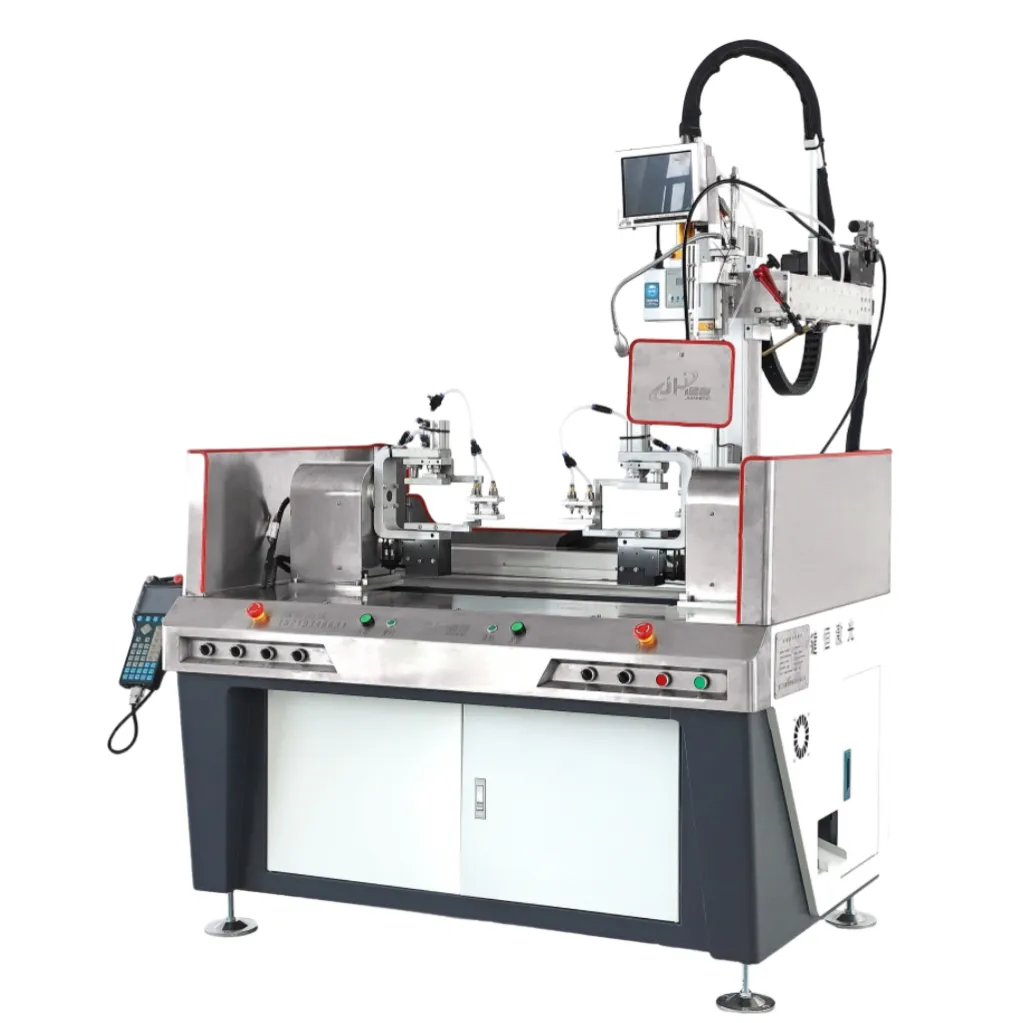
Technology and Core Differences Between Automatic Laser Welder and Traditional Welding
What is an automatic laser welder and how does it differ from traditional arc welding?
Laser welders work by focusing intense light energy to melt and join materials at a microscopic level. Traditional arc welding techniques depend on electricity or gas flames instead. The difference here matters a lot because it means no risk of electrode contamination during the process. Plus, these laser systems can operate anywhere from two to five times quicker than standard MIG or TIG welding methods. A recent industry report from 2024 actually backs this up, showing just how much faster production can be when switching to laser technology.
Key technological principles behind laser welding efficiency
Laser systems optimize efficiency through precise beam intensity control and pulse modulation, generating up to 10 times less heat input than arc welding. This minimizes thermal distortion while maintaining stable weld pools—especially beneficial for heat-sensitive alloys.
| Parameter | Laser Welding | Traditional Welding |
|---|---|---|
| Typical Speed | 1-20 m/min | 0.2-0.8 m/min |
| Heat Affected Zone | <0.5mm | 2-10mm |
| Energy Transfer | 95% efficient | 65-75% efficient |
Role of automation and robotics in enhancing laser welding precision
Integrated collaborative robots (cobots) allow automatic laser welder systems to maintain ±0.01mm repeatability over 10,000+ cycles—far beyond manual capabilities. Studies show automated laser systems reduce positional errors by 92% compared to robotic arc welding, particularly in curved joint applications.
Fundamental limitations of MIG/TIG in comparison to laser systems
Traditional welding struggles with materials under 0.5mm due to excessive heat dispersion, whereas laser systems effectively weld sheets from 0.1mm to 30mm. In stainless steel applications, TIG methods exhibit 2–4 times higher defect rates (2024 Welding Defect Analysis), often requiring post-processing that increases labor costs by 30–40%.
Initial Investment and Equipment Cost Comparison
Upfront Cost Breakdown: Laser Welding Systems vs. Traditional Setups
The upfront cost for automatic laser welders is generally about 2 to 3 times what companies pay for standard MIG or TIG welding equipment. Industrial grade lasers can set manufacturers back anywhere between 200 grand to half a million dollars. The price tag covers things like high precision optical components, robotics that integrate with production lines, plus all the necessary safety gear required for these advanced systems. Traditional manual arc welding setups tend to be much cheaper, usually falling somewhere between $50k and $150k, though they obviously don't come with any automated features. According to an industry report last year, many businesses forget to factor in installation expenses and employee training when budgeting for laser systems. These hidden costs actually make up around 18% to 22% of the total investment, which explains why so many shops end up spending more than initially planned.
Cost Analysis: Balancing Initial Investment With Long-Term Industrial Savings
For manufacturers performing over 10,000 welds per month, operational savings offset higher upfront costs within 18–36 months. Laser systems reduce labor needs by 70% and energy consumption by 40% compared to arc welding (Ponemon 2023). The table below outlines five-year cost projections:
| Cost Component | Laser Welder | Traditional MIG/TIG |
|---|---|---|
| Initial Investment | $350,000 | $90,000 |
| Labor (5 yrs) | $175,000 | $440,000 |
| Energy (5 yrs) | $28,000 | $47,000 |
| Maintenance (5 yrs) | $60,000 | $38,000 |
| Total | $613,000 | $615,000 |
Case Study: Automation ROI in Industrial Applications
One major manufacturer saw about $740k saved over five years when they swapped out their manual assembly cells for laser welding systems. Their scrap rate went down dramatically from nearly 5% to just over 1%, while production output jumped almost 90%. The return on investment came around 26 months after implementation, which lines up with what other studies have found recently according to Ponemon's research last year. These kinds of improvements really highlight why laser welding makes sense for industries where volume matters and precision is critical, such as making those complex battery trays used in cars today.
Operational Efficiency, Speed, and Production Consistency
Welding speed comparison: laser vs. TIG/MIG in high-volume manufacturing
Automatic laser welders operate up to 4x faster than TIG/MIG processes in automotive assembly, achieving speeds of 15 meters per minute versus 3.6 meters per minute for arc-based methods (Ponemon 2023). This advantage stems from concentrated energy delivery, eliminating filler material needs and reducing inter-pass cooling time.
Cycle time reduction and throughput gains with automatic laser welder systems
By combining robotic positioning with real-time seam tracking, automated laser systems cut cycle times by 40–60% in battery tray fabrication. One aerospace manufacturer reported a 72% increase in daily output, reaching 1,200 units per 8-hour shift—compared to just 450 units with traditional welding.
How automation minimizes human error and unplanned downtime
Automated laser welders achieve <0.2% defect rates using machine vision guidance, far surpassing manual TIG welding’s 1.5–2% rework rate in pressure vessel manufacturing. Robotics ensure consistent torch angles (±0.1°) and travel speeds (±0.05 m/s), reducing spatter-related downtime by 83% annually.
Industry trend: rising adoption in automotive and aerospace sectors
The automotive sector now employs automated laser welding in 68% of EV battery enclosure production due to its ability to deliver hermetic seals. Aerospace manufacturers rely on laser systems for turbine blade repair, as 92% of next-gen engine components must meet FAA heat tolerance standards achievable only through laser-grade weld integrity.
Weld Quality, Precision, and Material Suitability
Laser vs. Traditional Welding: Strength, Consistency, and Defect Rates
Automatic laser welder systems produce welds with 97% fewer defects than MIG/TIG methods, according to a 2023 American Welding Society study. Laser welds achieve up to 15% higher tensile strength due to refined microstructures formed under concentrated heat. Defect rates typically remain below 0.2%, compared to 3–5% in manual processes.
Micron-Level Precision and Control Advantages of Automatic Laser Welder Systems
Laser systems deliver positional accuracy within ±0.01mm via closed-loop motion control, enabling unmatched precision for critical applications. Advanced beam shaping allows fine-tuned control of weld pool dynamics, significantly reducing post-weld machining requirements—by 60–80%—in aerospace and medical device manufacturing.
Heat-Affected Zone (HAZ) and Material Distortion: Laser’s Key Advantage
Laser welding creates a heat-affected zone (HAZ) up to 80% smaller than arc welding. For stainless steel, this reduces thermal distortion by 70% (Laser Technology Review 2024), preserving dimensional accuracy in thin-wall vessels and semiconductor equipment. Reduced heat exposure also maintains mechanical properties in sensitive alloys like 6061 aluminum.
Material Thickness Considerations: When Laser Excels or Falls Short
Laser welding works really well with materials ranging from about half a millimeter up to around 8mm thick. It can penetrate completely through these materials at speeds roughly three times faster than traditional TIG welding techniques. But when dealing with thicker sections over 15mm, old school methods still tend to be more practical because lasers just can't get deep enough into the material. The good news is that newer hybrid systems combining laser technology with arc welding are starting to bridge this gap. These mixed approaches now handle steel plates between 10 and 25mm thickness quite effectively, which makes them particularly useful in industries like shipbuilding where working with substantial metal sections is common practice.
Long-Term Cost Effectiveness and Strategic Industry Applications
Maintenance and Consumable Costs Over a 5-Year Lifecycle
Laser welding systems automatically cut maintenance expenses by around 40% over five years because they have far fewer mechanical components and their optical parts are completely sealed against contamination. The money saved on consumables is also impressive - shielding gases and electrode replacements come out about 30% cheaper than traditional methods. What really makes a difference though is how much less post-weld finishing work needs doing after the fact. Thermal distortion drops so dramatically that shops report cutting their finishing time by nearly two thirds. One factory in southern China upgraded their equipment last year and saw something remarkable happen. Their repair rate plummeted from 12% down to just 0.7%, which means they got all their investment back within 18 months of installation.
Total Cost of Ownership: Laser Welding in Automated Production Environments
In high-volume settings, integrated laser systems reduce total ownership costs by 28%. Energy savings (35% lower consumption), reduced labor (50% fewer operators), and adaptive optics (20% less material waste) drive long-term efficiency. AI-powered real-time monitoring further decreases unplanned downtime by 65%—a crucial benefit for automotive Tier 1 suppliers handling 15,000 components daily.
Strategic Justification for Upgrading to Automatic Laser Welder Systems
Aerospace manufacturers report 72% faster production cycles after adopting laser systems, essential for fabricating thin-wall turbine components. Medical device producers have reduced scrap rates from 12% to 1.8% through micron-precision hermetic sealing. Regulatory demands, including the EU’s tightening emissions standards, make laser welding increasingly vital for eco-conscious manufacturing.
Future Outlook: Advancements in Laser Technology Improving Affordability
The latest generation of diode lasers is staying operational for well over 40,000 hours, which is double what was considered standard back in 2020. Industry experts predict these numbers could hit around 50,000 hours by the time we reach 2028. Manufacturers have also started incorporating modular designs that cut down upgrade times by roughly 60%. And when it comes to maintenance, artificial intelligence is playing a big role too. Predictive maintenance systems powered by AI can slash yearly service expenses by about eighteen thousand dollars per unit. All these improvements are helping bring laser tech within reach of smaller operations. Entry level systems today cost approximately 32 percent less than similar models from 2021, which explains why many small batch producers are finally able to incorporate this advanced technology into their workflows.
FAQ Section
What are the advantages of laser welding compared to traditional welding?
Laser welding is faster, has a higher precision rate, lower defect rates, and provides significant energy and labor savings compared to traditional TIG and MIG welding methods.
Is laser welding suitable for thick materials?
Laser welding works excellently on materials up to 8mm thick. For thicker materials, hybrid systems combining laser technology with arc welding can be effective.
What are the initial costs of laser welding systems?
Initial costs for laser welding systems are about 2 to 3 times higher than traditional setups, ranging from $200,000 to $500,000, due to the sophisticated technology and equipment involved.
What cost savings can be expected with laser welding?
Laser systems reduce labor needs by 70% and energy consumption by 40%, with a five-year ownership cost that often matches or is slightly less than traditional methods after initial investment recovery.

