
 EN
EN



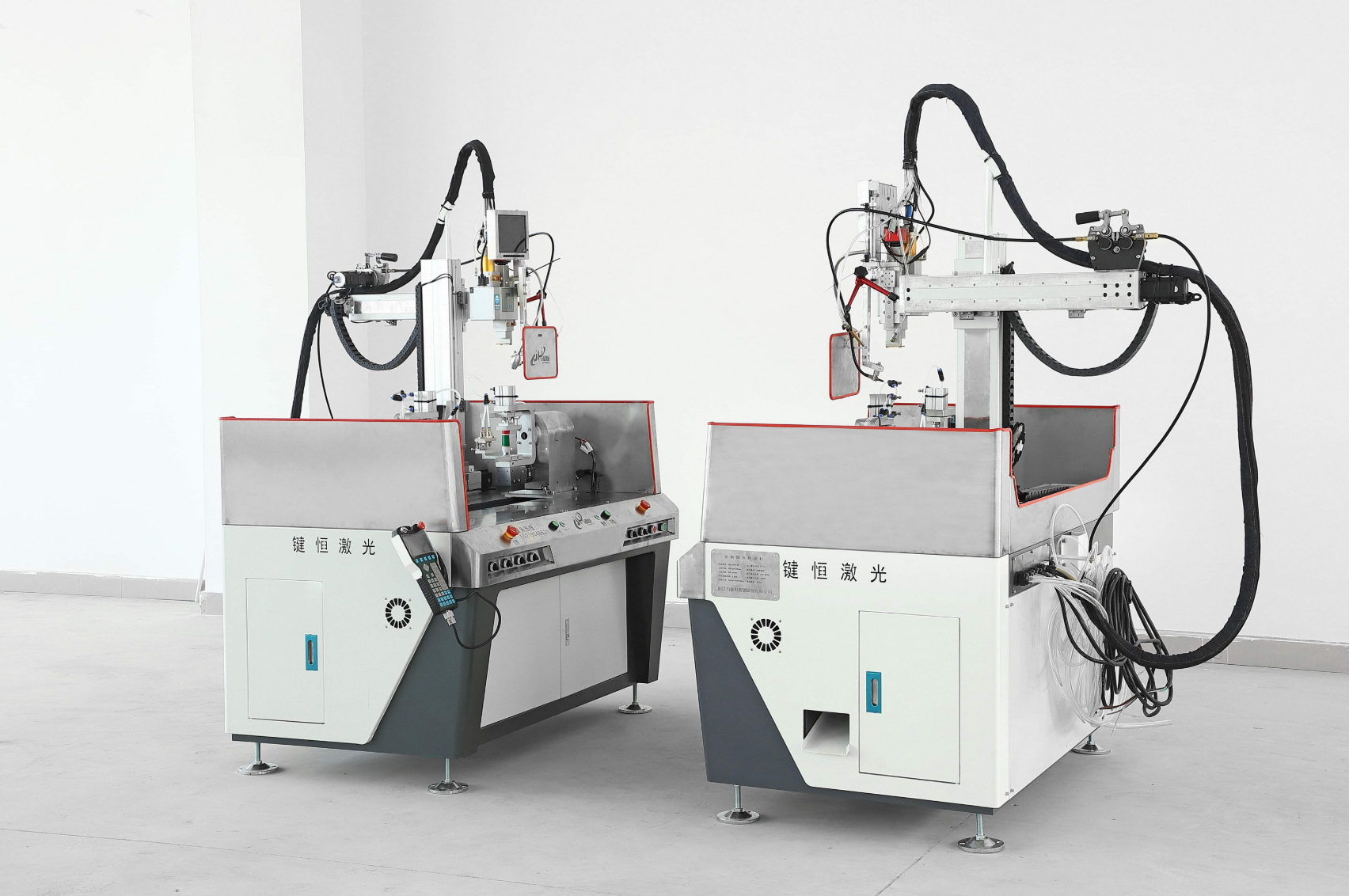
Enabling Smart Manufacturing with Automatic Laser Welder Integration
How Automatic Laser Welder Enables Smart Manufacturing Ecosystems
Laser welders that operate automatically are becoming essential in modern Industry 4.0 factories because they combine accurate welding techniques with connected machinery throughout the plant. Most of these welding systems now work with internet-connected devices and artificial intelligence software that helps monitor everything happening at each station along the production line. According to research published last year looking at how smart factories function, plants that have adopted these advanced welding technologies saw about a two-thirds drop in delays when sharing information between different departments, something traditional manufacturing setups just can't match.
Bridging Automation and Digital Connectivity in Industry 4.0 with Laser Welding
Modern laser welding systems act as convergence points for robotic actuators, quality control sensors, and enterprise resource planning (ERP) software. This connectivity allows:
- Instant parameter adjustments based on material thickness variations
- Closed-loop feedback between welding lasers and inventory databases
- Automated documentation of weld metrics for compliance audits
Leading manufacturers report 22% faster changeover times when using this integrated approach (SME Journal, 2023).
Data-Driven Decisions Through IoT and Real-Time Monitoring in Welding Systems
IoT-enabled laser welders generate over 1,200 data points per minute, feeding predictive maintenance algorithms and quality assurance models. Advanced systems now feature:
| Capability | Impact |
|---|---|
| Thermal imaging sensors | 94% defect detection accuracy |
| Energy consumption tracking | 18% power savings via dynamic adjustment |
| Weld penetration analytics | 0.02mm consistency across batches |
These metrics enable factories to shift from fixed production schedules to condition-based operational models.
Case Study: Digital Traceability Using Automatic Laser Welding at Yangjiang Jianheng Intelligent Equipment Co Ltd
Yangjiang Jianheng implemented laser welding systems with blockchain-enabled traceability modules, creating immutable records for each welded component. The system automatically cross-references weld parameters with:
- Raw material certificates
- Machine calibration histories
- Operator certification status
This integration reduced quality disputes with automotive clients by 41% within six months while achieving full AS9100D compliance.
CNC Programmable Laser Beam Welding for Agile, Scalable Production
Advantages of CNC Programmable Laser Beam Welding in Dynamic Manufacturing Environments
Laser beam welding that can be programmed through CNC systems offers incredible accuracy when things need to move quickly on the factory floor. Recent studies from 2023 found these systems cut down positioning mistakes by around 82% compared to what happens with manual techniques. The way these machines work is pretty straightforward really they take those CAD drawings and turn them into precise welding routes. This means no more waiting around for complicated setups when dealing with tricky shapes something that makes all the difference for sectors like aerospace manufacturing. Parts there have become much more varied over recent years, growing by nearly 40% between 2020 and 2023 according to SME Journal. What's truly impressive though is how these systems handle materials that aren't perfectly consistent. Even if thickness varies by as much as plus or minus 0.2 millimeters, the welds still hold together properly. And this capability lets factories switch between different products three times quicker than before.
Integrating Fiber Lasers into Automated Workflows for Precision Control
Fiber laser integration elevates automation by enabling micron-level power modulation during welding operations. A leading medical device manufacturer achieved 99.7% consistency across 30,000 annual units using CNC-controlled laser systems with integrated vision-based quality checks. Key advances include:
| Metric | Manual Welding | CNC Fiber Laser | Improvement |
|---|---|---|---|
| Energy Efficiency | 62% | 89% | +43% |
| Defect Rate | 8.2% | 0.5% | -94% |
Seamless integration with robotic material handling systems has reduced idle time by 67% in automotive battery tray production lines.
Modular Laser Systems Enabling Scalable and Flexible Production
Welding cells that can scale up or down with different laser modules let factories change their output capacity in just two days flat. And this matters because almost three quarters of manufacturers deal with changing demands every quarter according to PwC's latest report from 2024. Take one factory in China for instance they managed to cut their setup costs nearly in half when they switched to these modular automatic laser welders. These systems work on everything from tiny electronics components measuring just 5mm to massive structural beams over 2 meters long. The whole plug and play concept fits right into what Industry 4.0 is all about with its focus on spreading out manufacturing operations. Plus most production runs maintain that tight 0.1mm precision level across almost all batches which makes quality control much easier for plant managers.
Robotic Integration with Laser Systems: Building Future-Ready Factories
Synergy Between Robotics and Automatic Laser Welder in Scalable Production
Factories today can boost their production speed by about 23 percent when they pair robotic arms with automatic laser welding tech, as shown in recent 2023 studies on manufacturing processes. These setups allow plants to run around the clock while keeping weld quality pretty consistent, with less than five percent variation even when making thousands of parts at once. What makes these systems so effective is how they handle complex shapes using smart AI algorithms that figure out the best welding paths. This means workers spend way less time adjusting programs manually—about 82 percent less than what was needed with older automated systems, according to those same industry reports from last year.
Deep Dive: Robotic Integration with Laser Systems for Flexibility and Efficiency
When six axis robots are connected to fiber laser welding heads, they can hold position within about 0.01 mm accuracy even when moving weights as much as 50 kilograms. What makes these systems so valuable is their ability to handle both delicate aerospace parts that need pinpoint welds and also tougher industrial jobs where strength matters most. The systems come equipped with thermal imaging technology that constantly monitors what's happening during the weld process. As temperatures fluctuate, these sensors will tweak the laser output between roughly 500 watts all the way up to 6000 watts depending on what the material needs. This helps stop unwanted warping from occurring when working in different workshop environments or outside conditions.
Real-World Application: Boosting Manufacturing Efficiency with Robotic Laser Welding
Automotive suppliers report 40% faster tooling changeovers using modular robotic laser welding cells. A standardized interface allows rapid reconfiguration between SUV chassis welding (15m weld paths) and EV battery tray assembly (2,300 micro welds). Operators maintain oversight through augmented reality (AR) dashboards showing joint penetration depth and weld seam temperatures.
Controversy Analysis: Full Autonomy vs. Human-in-the-Loop in Robotic Welding
In controlled settings, fully automated welding systems can produce around 99.7% flawless welds. Still, most manufacturers (about two thirds) keep humans involved when it comes to custom jobs. There's a big discussion going on right now about if those expensive AI vision systems, which cost roughly $4,200 per year to license, are really good enough to take over from experienced welders who spot those tiny material issues that machines might miss. What we see happening today is something of a middle ground approach. Operators still check the quality, but robots do the bulk work, handling nearly all the repetitive welding tasks across most production lines.
Driving Efficiency and Quality Improvements Through Laser Automation
Measuring Efficiency and Quality Gains from Laser Automation
Laser automation delivers measurable efficiency gains through closed-loop process control and standardized weld parameters. Industry analysis shows automated systems reduce manual intervention by 73% while maintaining 99.8% repeatability in high-volume production. These systems achieve 0.02mm positional accuracy through real-time sensor-driven calibration, enabling manufacturers to eliminate post-weld rework.
Reducing Defects with Real-Time Sensor Feedback and AI Optimization
Advanced laser welders deploy multispectral monitoring combining:
- Infrared thermal sensors detecting heat zone deviations
- High-speed cameras tracking molten pool dynamics
- Acoustic emission analysis identifying porosity formation
Machine learning algorithms correlate this data with weld quality databases, automatically adjusting pulse duration and focal spot size to compensate for material variations—reducing defect rates by 41% in sheet metal applications.
Benchmark Data: 38% Throughput Increase Post-Laser Automation (SME Journal, 2023)
A 2023 cross-industry study quantified laser automation's impact:
| Metric | Improvement | Measurement Period |
|---|---|---|
| Hourly throughput | +38% | 0–6 months |
| Energy consumption | -22% | 3–12 months |
| Scrap rate | -59% | 0–3 months |
The data confirms laser automation accelerates ROI through simultaneous quality and productivity gains, with 84% of adopters achieving full payback within 14 months.
Smart Monitoring and Predictive Maintenance in Automatic Laser Welding Systems
Modern automatic laser welders achieve peak performance through three interconnected capabilities: digital traceability, real-time monitoring, and predictive maintenance. These systems reduce unplanned downtime by 60% compared to conventional welding equipment (SME Journal, 2023), making them critical for Industry 4.0 readiness.
Digital Traceability, Real-Time Monitoring, and Predictive Maintenance as Core Pillars
Laser welding systems that are automated create detailed records with timestamps for each individual weld, leaving behind a digital paper trail that can be reviewed later. Manufacturers find this level of tracking really helpful when trying to spot quality issues, cutting down on detection time by around 40% compared to old fashioned manual checks according to a recent report from PatSnap in 2023. During actual welding operations, real time optical sensors work alongside thermal cameras to check if the welds hold up properly. At the same time, smart algorithms look at how much power gets used over time, helping predict when parts might start wearing out before they actually fail.
IoT-Enabled Sensors for Continuous Performance Tracking in Laser Welders
Industrial IoT sensors monitor 15+ parameters in modern automatic laser welders, including beam stability (measured in µm variance), gas purity levels, and focal spot consistency. Facilities using these integrated sensors reduced material waste by 18% and energy consumption by 22% compared to systems without IoT connectivity.
Shifting From Reactive Fixes to Proactive System Health Management
Smart laser welders aren't waiting for breakdowns to happen before fixing them. Instead they look at past performance data to plan maintenance work when it makes sense for operations. An automotive parts maker saw their equipment running nonstop 98.6% of the time after switching from rigid maintenance schedules to AI suggestions based on actual usage patterns. That represents a pretty impressive 31 point jump compared to what they were doing before (according to SME Journal's analysis from last year). The bonus? Laser sources tend to last around two to three extra years without losing that critical micron level accuracy that manufacturers depend on for quality control.
Frequently Asked Questions
What is the role of AI in automatic laser welding?
AI plays a significant role in automatic laser welding by facilitating predictive maintenance, adjusting welding parameters for different materials, and optimizing welding paths to increase efficiency and precision.
How does laser automation improve manufacturing productivity?
Laser automation enhances productivity by reducing manual intervention, ensuring consistent weld quality, and enabling faster changeovers, which collectively boost throughput and reduce scrap rates.
What industries benefit the most from automatic laser welding integration?
Industries such as automotive, aerospace, and medical device manufacturing greatly benefit from automatic laser welding due to the high precision, reduced defect rates, and scalability offered by these systems.
How do IoT sensors contribute to the efficiency of laser welding systems?
IoT sensors continuously monitor various parameters such as gas purity, beam stability, and power usage, which enables real-time adjustments to maintain consistency and quality in welding operations.

