
 EN
EN



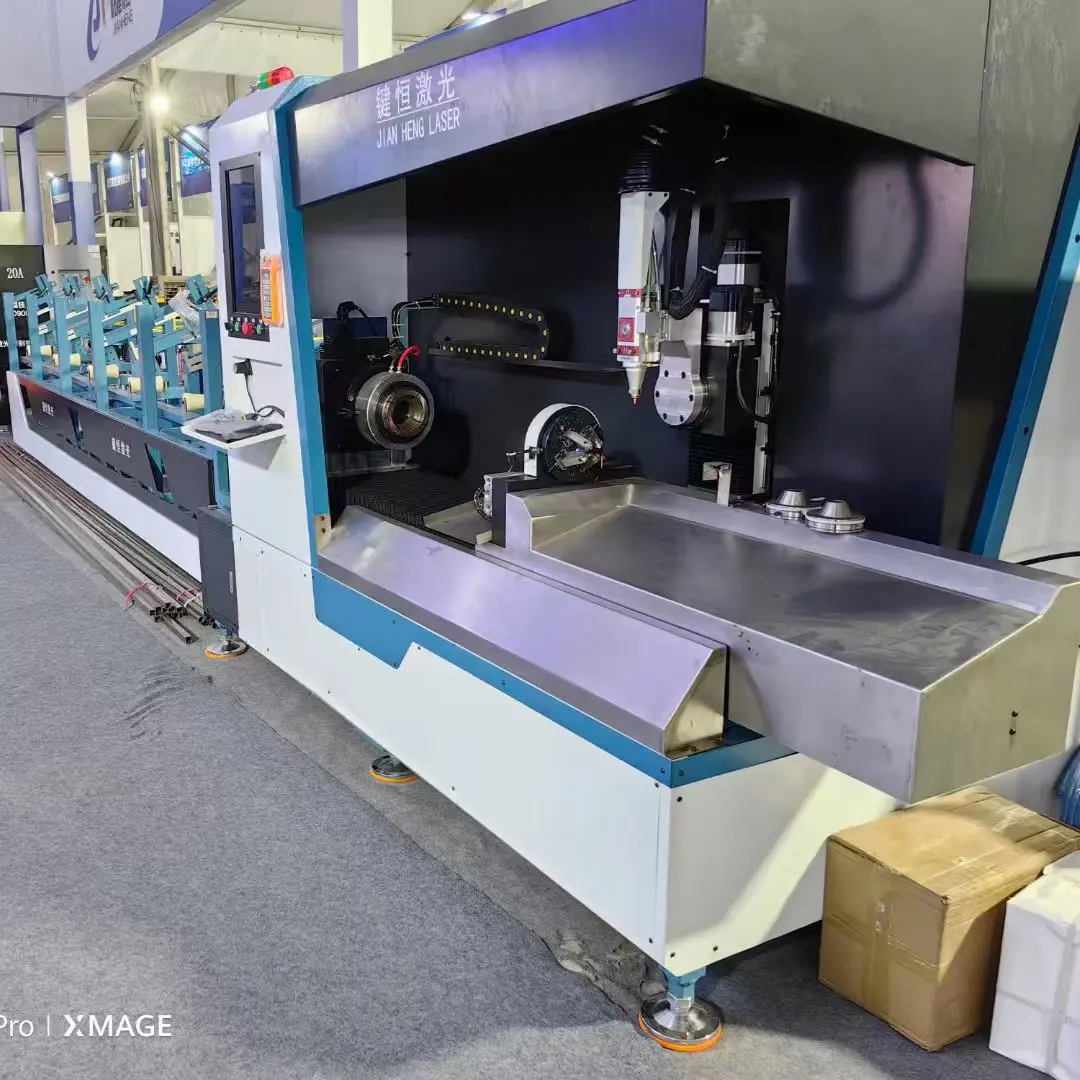
Why Fiber Laser Cutting Machines Deliver Unmatched Operational Reliability
Fiber laser cutting machines establish industry-leading reliability through fundamentally robust engineering principles that minimize failure points and maximize production continuity. This operational excellence stems from purposeful design choices that eliminate common vulnerabilities in alternative systems.
Solid-State Architecture: No Moving Optics or Gas Lasers
Unlike CO₂ lasers requiring precisely aligned mirrors and gas replenishment, fiber laser systems employ solid-state technology where photons travel through sealed fiber optics without exposed components. This eliminates three critical failure vectors: gas purity degradation in resonators, mirror surface contamination from airborne particles, and thermal misalignment risks from moving parts. The absence of these maintenance-intensive elements creates inherently stable beam delivery, ensuring consistent cutting quality across thousands of operational hours. Independent studies confirm solid-state configurations reduce adjustment-related interruptions by 76% compared to gas-based systems (Manufacturing Technology Review 2024).
Quantified Uptime Gains: 40–60% Fewer Maintenance Hours vs. CO₂ and Plasma Systems
The architectural advantages directly translate into measurable productivity gains:
| Maintenance Metric | Fiber Laser | CO₂/Plasma Systems |
|---|---|---|
| Alignment verifications | Biannual | Weekly–Biweekly |
| Gas system interventions | None | 8–12 annually |
| Consumable replacements | 3–4/year | 15–20/year |
Industry data confirms fiber laser cutting machines require 40–60% fewer maintenance hours versus alternatives, primarily by eliminating gas management, mirror realignment, and contamination countermeasures (Production Efficiency Report 2023). This efficiency delivers an additional 200–300 production hours annually per machine—converting maintenance time directly into profitable output. The compounded effect across multi-machine facilities underscores why manufacturers increasingly standardize on fiber technology for mission-critical operations.
How Reduced Maintenance Frequency Directly Boosts Production Uptime
Extended Optics Cleaning and Alignment Intervals (3–6× Longer Than CO₂)
Fiber laser cutting machines require optics servicing just every 600–1,200 operating hours—contrasting sharply with CO₂ lasers needing intervention every 200 hours. This 3–6× extension directly translates to ~20% more annual production time. McKinsey & Company quantifies that such maintenance efficiency gains lift facility uptime by 10–20% (2021). Fewer stoppages for lens cleaning or beam realignment minimize disruption cycles, allowing production lines to sustain material throughput without recalibration delays—and maintaining speed and precision consistency to elevate Overall Equipment Effectiveness (OEE). A Thermo Fisher analysis confirms that predictive upkeep strategies anchored in extended service intervals reclaim 18–30% of lost capacity from unplanned halts.
Elimination of Resonator Gases, Mirror Realignment, and Beam Path Contamination Risks
Solid-state fiber laser architecture removes CO₂ laser vulnerabilities: no resonator gas replenishment, no unstable mirror arrays, and sealed beam paths blocking particulate ingress. Where traditional systems lose 50–70 hours yearly to gas leaks and optical chamber contamination, fiber lasers eliminate these failure vectors entirely. Each avoided incident prevents 2–8 hours of reactive downtime while sidestepping associated consumable replacement costs. Ponemon Institute data reveals unplanned manufacturing outages cost plants over $740k hourly (2023)—a risk meaningfully mitigated by this inherent reliability. By negating resonator maintenance and realignment workflows, fiber laser cutting technology ensures continuous sheet metal processing with sub-0.1mm tolerances.
Smart, Low-Intervention Subsystem Design in Modern Fiber Laser Cutting Machines
Closed-Loop Cooling Systems with Predictive Diagnostics and Minimal Servicing
Modern fiber laser cutting machines integrate intelligent closed-loop cooling systems. Embedded sensors continuously monitor temperature and flow rates, while predictive algorithms alert operators to potential issues before failures occur—eliminating unplanned downtime caused by overheating. Maintenance is reduced to annual coolant replacements and filter checks, enabling months of uninterrupted runtime versus traditional chillers.
Durable Nozzle and Cutting Head Engineering: Airflow Integrity Without Frequent Replacement
Cutting heads now feature hardened nozzles and sealed optical paths—blocking metal vapor and debris from contaminating internal lenses. Airflow consistency remains stable for thousands of cutting hours. Engineers have eliminated alignment adjustments during nozzle changes, extending part life and reducing consumable costs by 35%.
FAQ
What makes fiber laser cutting machines more reliable than CO₂ systems?
Fiber laser cutting machines use a solid-state architecture that eliminates the need for moving optics and gas lasers, reducing failure points and maintenance requirements.
How often do fiber laser machines require maintenance compared to CO₂?
Fiber laser machines typically need maintenance every 600–1,200 operating hours, whereas CO₂ systems require it every 200 hours.
Are there significant cost benefits to using fiber laser cutting machines?
Yes, fiber laser cutting machines reduce maintenance hours by 40–60% compared to CO₂ and plasma systems, resulting in additional production hours and reduced downtime costs.
What kind of maintenance benefits do closed-loop cooling systems offer?
Closed-loop cooling systems with predictive diagnostics reduce unplanned downtime by alerting operators to potential issues before failures occur, offering months of uninterrupted runtime.

