
 EN
EN



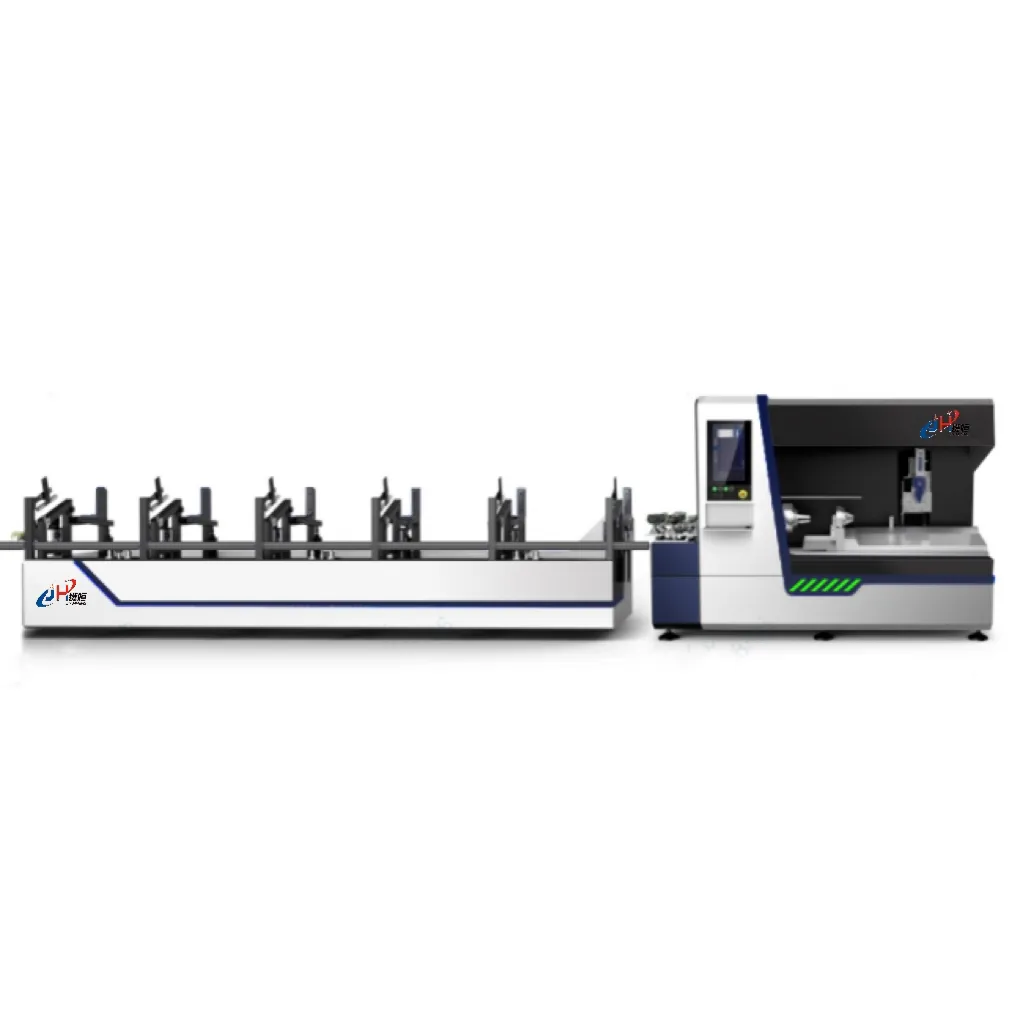
Match Laser Power to Your Material & Production Needs
1kW–3kW vs. 6kW–12kW+: Selecting the Right Fiber Laser Cutting Machine Wattage for Common Metals
Laser wattage must align precisely with your dominant materials and thicknesses—not just peak capability. For thin, non-reflective metals like 1mm aluminum or mild steel, a 1–2kW fiber laser delivers optimal speed, edge quality, and energy efficiency. Stainless steel up to 10mm performs well with ≥3kW systems; beyond that, precision and throughput drop significantly without higher power. At 25mm carbon steel, a 6kW+ laser is essential for viable cycle times—while structural steel exceeding 50mm requires industrial-grade 12kW systems to overcome thermal inertia and maintain cut integrity. Reflective materials (e.g., copper alloys) demand specialized beam stabilization and high-brightness sources—features rarely found in sub-3kW entry-level platforms. Underpowering invites real operational penalties: industry data shows piercing time on 8mm stainless steel increases 300% with insufficient wattage, accelerating nozzle wear and raising assist gas consumption.
How Power Affects Cut Speed and Edge Quality on Stainless Steel (1.5mm vs. 25mm)
Wattage directly governs both productivity and metallurgical finish—but only when matched intelligently to thickness. On 1.5mm stainless steel, a 3kW laser achieves 25m/min with near-polished edges and minimal micro-burr formation; a 1kW system struggles to exceed 8m/min and often leaves inconsistent edge quality. For 25mm plates, 6kW lasers cut four times faster than 3kW units while reducing dross by 70%, per peer-reviewed metallurgical studies. However, excessive power on thin sections causes heat distortion: applying a 12kW laser to 2mm stainless increases edge roughness by 40% versus a 3kW system. Modern pulsed-beam modes mitigate this risk by dynamically modulating energy delivery—preserving ±0.05mm dimensional tolerance across all wattage classes.
Choose the Optimal Machine Configuration and Bed Design
Flatbed vs. Tube vs. 3D: When Each Fiber Laser Cutting Machine Type Delivers Real Value
Your workpiece geometry dictates the most cost-effective configuration. Flatbed systems excel in high-volume sheet metal fabrication—automotive body panels, architectural cladding, and appliance enclosures benefit from their speed, repeatability, and nesting efficiency. Tube lasers specialize in structural profiles, piping, and hollow sections, eliminating multiple secondary operations in handrail, frame, and chassis manufacturing. Meanwhile, 3D fiber laser cutting machines enable precision contouring of complex, freeform parts—critical for aerospace brackets, medical device components, and sculptural architecture. According to the Fabrication Trends Report 2023, matching machine type to dominant part form delivers an average 87% productivity gain over mismatched deployments.
Bed Size & Layout Impact: Balancing Part Dimensions, Nesting Efficiency, and Floor Space
Bed dimensions influence throughput, material yield, and facility utilization—not just maximum part size. Oversized beds inflate capital and energy costs when processing small components; undersized beds force panel segmentation, increasing handling time by 30% (Manufacturing Efficiency Journal, 2024). Key nesting considerations include:
- Larger beds allow tighter part arrangements, improving material utilization by 15–22%
- Modular bed designs support future shifts in material size or product mix without full system replacement
- Integrated conveyor or pallet-loading systems reduce manual intervention—especially valuable in high-mix, low-volume environments
Always validate your largest planned workpiece against the machine’s usable cutting area—and add a 10% buffer for fixture clearance and motion safety margins.
Evaluate Automation That Drives Measurable Labor Savings
Autofocus, Preset Libraries, and AI Path Optimization: ROI Beyond Marketing Claims
Automation features deliver quantifiable labor savings—not theoretical efficiencies. Autofocus eliminates manual focal-point calibration, saving 3–5 minutes per setup—a critical advantage in job-shop or high-mix production. Preset libraries store validated parameters for common materials and thicknesses, cutting setup time by more than half on repeat jobs. AI-driven path optimization sequences cuts intelligently, avoiding collisions and minimizing non-cutting travel—reducing total cycle time by 15–20%. Together, these capabilities enable one operator to oversee multiple machines safely and effectively. Industry benchmarks confirm automation typically reduces labor requirements per part by 30–40% in metal fabrication shops, with ROI realized in under 12 months through redeployed staff, reduced overtime, and fewer setup errors.
Assess Software Integration and Long-Term Flexibility
CAD/CAM Compatibility, Offline Programming, and Avoiding Proprietary Lock-in
Operational resilience begins with open, standards-based software integration. Prioritize fiber laser cutting machines compatible with mainstream CAD/CAM platforms (e.g., SolidWorks, Autodesk Fusion, SigmaNEST) to avoid costly file conversions—mid-sized fabricators lose 15% of productive machine time annually due to format incompatibility. Offline programming allows job preparation, simulation, and queuing during active production, slashing idle time by up to 30%. Equally important is architectural openness: proprietary lock-in traps 72% of manufacturers in expensive upgrades or abandoned workflows within five years (Industry Automation Survey, 2023). Demand documented APIs, modular software design, and vendor-agnostic nesting tools—ensuring seamless integration with emerging technologies like AI-driven nesting, MES systems, or digital twin platforms. Your investment must scale to handle triple today’s data volume and integrate with third-party enterprise systems as your operation grows.
Calculate True Total Cost of Ownership (TCO)
Consumables, Gas Systems, and Utility Demands: Hidden Costs of Operating a Fiber Laser Cutting Machine
The purchase price reflects only 30–40% of a fiber laser cutting machine’s five-year cost. Recurring expenses dominate long-term economics: nozzles ($50–$200) and focusing lenses ($300–$800) require quarterly replacement in high-utilization shops. Assist gas—nitrogen for stainless/aluminum, oxygen for carbon steel—costs $1,200–$5,000 monthly depending on thickness and runtime. Electrical demand is substantial: a 6kW laser consumes 30–50 kWh per operating hour, adding $3,000–$8,000 annually to utility bills. Water cooling maintenance adds another $500–$1,500/year. Collectively, these operational costs represent 15–30% of the machine’s initial price each year—a figure that escalates sharply with underutilized or misapplied wattage.
Warranty, Support SLAs, and Spare Parts Reality: What '24/7 Technical Support' Actually Delivers
Vendor promises require rigorous validation—not assumptions. Standard warranties commonly exclude consumables and limit laser source coverage to 1–2 years. “24/7 technical support” often means remote diagnostics only—with documented 48+ hour response windows before on-site dispatch. Spare parts availability is equally consequential: a replacement cutting head can cost $15,000–$40,000, and lead times stretch to three weeks during supply chain volatility. Before signing, insist on written SLA commitments—including guaranteed Mean Time To Repair (MTTR), documented spare parts inventory levels, and clear escalation paths for mission-critical failures. These metrics—not marketing slogans—determine uptime, productivity, and true TCO.
Frequently Asked Questions
What is the best wattage for cutting thin metals?
For thin non-reflective metals like 1mm aluminum or mild steel, a 1–2kW fiber laser delivers optimal speed and edge quality.
How does laser power affect cutting speed and edge quality on stainless steel?
Laser power directly influences productivity and finish quality. For instance, on 1.5mm stainless, a 3kW laser achieves better speed and edge quality than a 1kW system.
What should be considered when choosing a fiber laser cutting machine type?
Your workpiece geometry and material should dictate the machine type—flatbed, tube, or 3D—to optimize cost and productivity.
What are the hidden costs of operating a fiber laser cutting machine?
Besides the purchase price, consider recurring costs like consumables, assist gas, and electricity, which can significantly impact long-term economics.

