
 EN
EN



Why CNC Laser Cutting Machine Precision Unlocks Complex Geometries
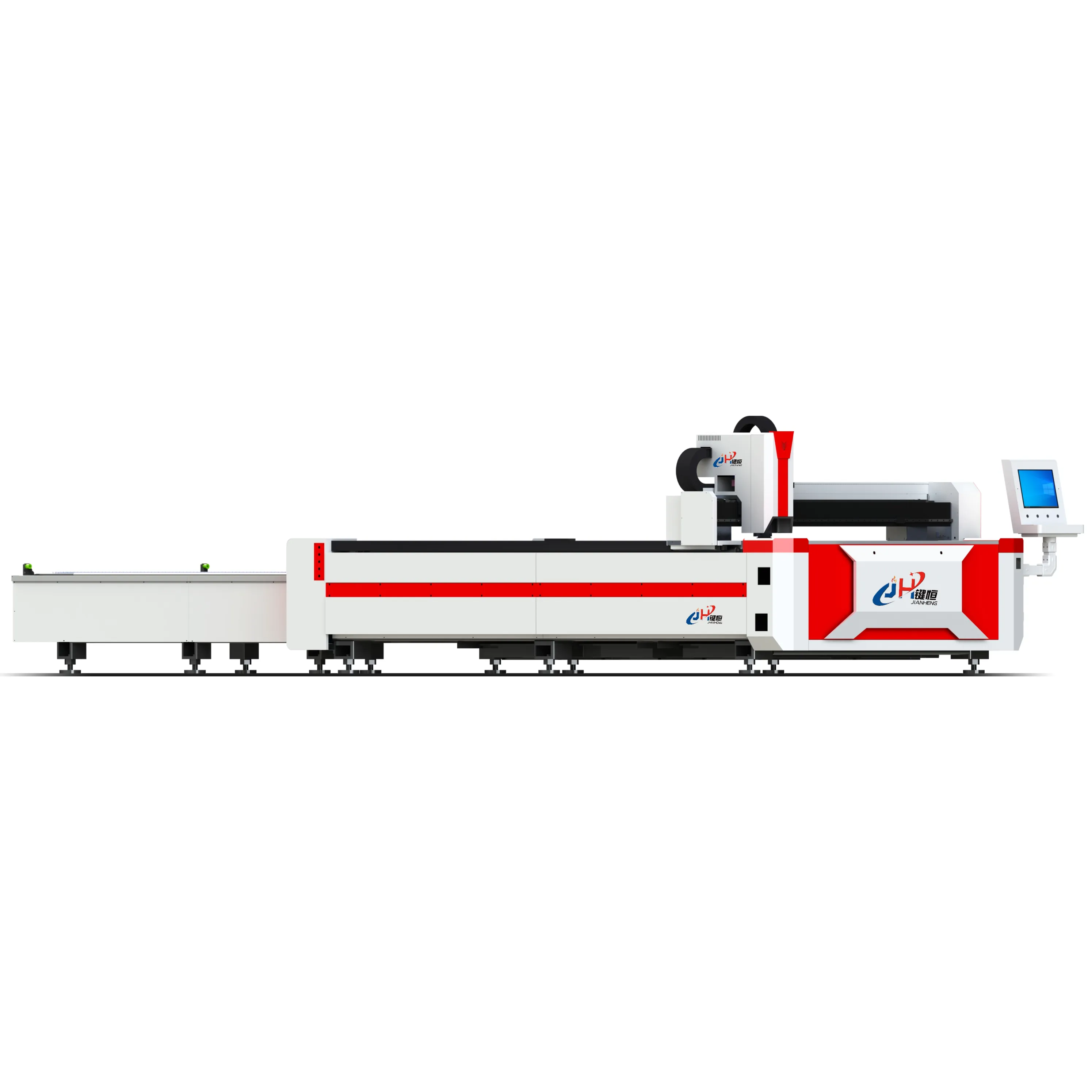
Sub-0.1mm Tolerances and Fine-Feature Accuracy on Flat and Formed Parts
Fiber based CNC laser cutters can hit tolerances below 0.1mm which makes possible complex shapes that traditional tools simply cant handle. These systems avoid problems with tool wear and the distortions that come from physical contact, so parts stay dimensionally stable whether working with metal, plastic or composite materials. The aerospace industry has jumped on board for making those super light titanium brackets with tiny ventilation holes. A recent study back in 2023 showed components made with tolerances around 0.08mm saw about 30% fewer rejects compared to old school machining techniques. What really stands out is how these lasers work just as well on curved surfaces too. Aircraft makers no longer need extra steps to add things like louvers or embossed designs since the machine can cut them right into the curved skin during production.
Non-Contact Advantage: Superior Edge Quality on Thin-Wall, Micro-Feature, and Heat-Sensitive Components
Laser cutting works without touching the material, so it doesn't deform those super thin walls under half a millimeter thick or mess up tiny features down to about 75 micrometers. The focused beam creates really small heat affected areas, which keeps sensitive metals like Nitinol intact for things such as heart stents where smooth edges matter a lot - we're talking less than 20 micrometer variations here. Speaking of precision work, these lasers can etch copper circuits as narrow as 15 micrometers wide while keeping almost all their conductivity properties intact according to recent research from Materials Processing Journal back in 2024. Mechanical methods just can't match this kind of performance because they introduce stresses, vibrations, and sometimes even microscopic cracks that ruin delicate components. That's why fiber lasers have become go-to tools when working on intricate medical devices or tiny electronic parts where every detail counts.
Expanding 3D Design Freedom with Multi-Axis CNC Laser Cutting Machine Capabilities
5-Axis Integration for Compound Angles, Chamfers, and Contoured Profiles in Aerospace and Medical Applications
Modern multi axis CNC laser systems can move at the same time along X, Y, Z axes plus two rotational ones (A and B). These systems make it possible to cut complex angles on curved surfaces like those found in turbine blades or housing parts for surgical instruments. The aerospace industry benefits greatly from these capabilities, achieving tolerances around 0.05 mm for airframe components that incorporate lightweight lattice structures. When making titanium joint replacements, five axis laser cutting handles complicated shapes without creating tiny fractures that often happen when milling thin walls. Since there's no tool deflection during operation, these machines maintain accuracy even on curved surfaces something that has always been difficult with conventional machining methods.
Case Study: Titanium Bone Implant Lattices – Achieving Biomimetic Complexity Beyond Milling or EDM
The latest fiber laser tech is making real breakthroughs in creating lattice structures for spinal fusion cages that look a lot like trabecular bone. These designs really push the limits of what EDM and traditional milling can handle. EDM has trouble dealing with those tricky undercuts, while milling tends to shake up those delicate 0.2mm struts. Fiber lasers cut through these porous shapes with amazing accuracy around 50 microns, keeping the material intact and hitting about 87% porosity which matters a lot for how well the bone grows into the implant. Doctors have noticed patients recovering roughly 40% faster after surgery thanks to better fluid movement through these structures. What's truly impressive is how manufacturers manage dynamic focal lengths when moving across multiple axes. This lets them create those complex, curved support surfaces that mimic biology at actual production volumes rather than just lab prototypes.
Accelerating Innovation: CNC Laser Cutting Machine in Rapid Prototyping and Low-Volume Production
From CAD to First-Cut in <2 Hours: Streamlining Iteration for Custom, Complex Parts
CNC laser cutters really speed up the prototyping process, often getting the first physical part from CAD designs in just under two hours. This kind of fast turnaround lets engineers test out complicated shapes such as lattices or tiny detailed features all within one day's work. Traditional manufacturing approaches can take days just to adjust tools, but these lasers work without touching the material directly. They keep tight tolerances around plus or minus 0.1 mm across more than thirty different materials ranging from tough aerospace titanium to bendy plastics. Getting rid of those expensive physical tools cuts down on iteration costs by about 45 percent according to recent industry data from 2025. The savings make it possible to develop things like custom medical implants or intricate car components much faster, especially when only small quantities are needed despite their complexity.
Micro-Manufacturing Excellence: Fiber-Based CNC Laser Cutting Machine for Sub-Millimeter Precision
Fiber based CNC laser cutters can get down to around 0.01mm accuracy, which makes these machines absolutely essential for making tiny parts. The way they work with their concentrated beams allows for creating shapes smaller than a millimeter while wasting almost no material and keeping the structure intact. This is particularly important when working with materials that react badly to heat, such as those used in electronic devices or aircraft components. Since there's no physical contact during the cutting process, edges stay consistently clean throughout entire production batches without worrying about tools wearing out or parts getting distorted mechanically. Medical implant manufacturers love this because they need to produce delicate pieces for surgery that just aren't possible with traditional machining methods. Even better, the reduced heat affected zone protects walls thinner than half a millimeter, something that has completely changed the game for producing complicated micro parts in large quantities without compromising quality.
FAQ
What is the advantage of CNC laser cutting machines over traditional tools?
CNC laser cutting machines can achieve sub-0.1mm tolerances and handle complex shapes that traditional tools cannot. They offer superior edge quality without tool wear and keep parts dimensionally stable.
Can CNC laser cutters work on curved surfaces?
Yes, CNC laser cutters perform just as well on curved surfaces, allowing for intricate designs and features like louvers or embossed designs to be incorporated directly into the material.
How do fiber based CNC laser cutters benefit medical and aerospace industries?
These cutters enable the creation of intricate and precise parts that are vital in aerospace such as airframe components and medical devices like bone implants, offering extremely tight tolerances and excellent material handling.
What is the role of non-contact laser cutting in the production process?
Non-contact laser cutting prevents deformation of thin walls and tiny features, maintaining superior edge quality without introducing stresses or microscopic cracks to the material.
How does modern CNC laser technology accelerate rapid prototyping?
By transforming CAD designs into physical parts in under two hours, CNC laser technology accelerates prototyping, enabling faster testing and iteration for complex part designs.

