
 EN
EN



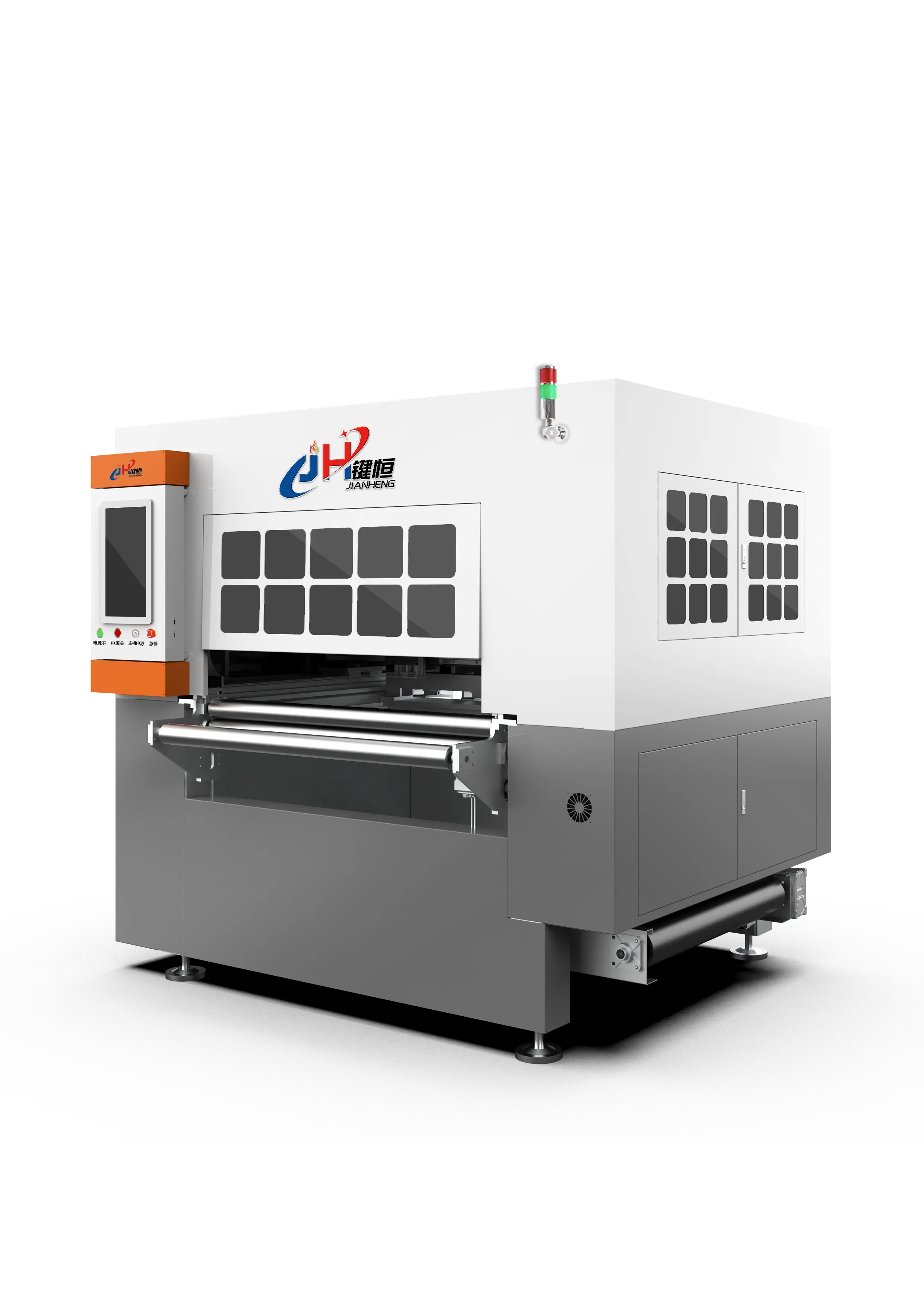
Debunking 'Zero Consumables': What a Fiber Laser Cutting Machine Really Requires
The Core Truth: No Lasing Medium or Mirrors to Replace
Fiber laser cutting machines eliminate traditional CO₂ laser consumables through solid-state technology. Unlike gas-based systems requiring regular gas refills and mirror replacements, fiber lasers generate beams within doped optical fibers—fully sealed and maintenance-free for over 100,000 operational hours. No lasing medium degrades, and no mirrors require realignment or cleaning throughout the laser module’s service life. This architecture reduces scheduled downtime by up to 70% compared to CO₂ systems, according to industrial efficiency benchmarks from the International Association of Laser Users (IALU).
Essential Wear Items: Protective Lenses, Nozzles, and Assist Gases
Three components wear during operation and require periodic replacement:
- Protective lenses, which shield the laser head from spatter and debris, typically last 200–400 cutting hours depending on material thickness and duty cycle
- Nozzles, responsible for directing assist gas flow and maintaining beam focus, degrade under thermal stress and generally require replacement every 80–120 hours
- Assist gases—oxygen for mild steel and nitrogen for stainless steel or aluminum—are consumed during cutting and must be sourced reliably; bulk gas supply contracts significantly reduce per-hour cost
While these items represent the only true consumables, their longevity and low unit cost cut annual consumable expenses by ~$18,000 versus comparable CO₂ systems in mid-volume shops. Strategic inventory planning—guided by usage logs and predictive alerts—ensures continuity without overstocking.
True Operational Costs: Electricity, Cooling, and Maintenance for Fiber Laser Cutting Machines
Energy Efficiency Benchmarks: kW/hour vs. CO₂ Lasers and Impact on Monthly Utility Spend
Fiber lasers deliver 30–50% lower energy consumption than CO₂ lasers for equivalent cutting tasks. A 4 kW CO₂ system draws 25–30 kW/hour at the wall, while a matching fiber laser operates at just 10–15 kW/hour—including chiller load. With no warm-up time required, fiber systems avoid the idle draw that adds 8–12% to CO₂ utility costs. For two-shift operations, this translates to $1,200–$2,500 in monthly electricity savings—accelerating ROI and reducing carbon emissions per part by up to 42%, as verified by the U.S. Department of Energy’s Industrial Technologies Program.
Auxiliary Systems: Chiller Load, Dry Air Requirements, and Real-World OpEx Add-Ons
Support infrastructure contributes meaningfully to operational expense:
- Dedicated chillers dissipate 3–8 kW of waste heat—adding 15–25% to total power draw
- Dry air systems maintain humidity below 10% to protect optics, requiring compressor energy and annual desiccant replacement
- Annual maintenance for auxiliary subsystems averages $1,500–$3,500, covering coolant filtration, nozzle alignment verification, and gas line integrity checks
Unplanned failures in these systems can cost $500+/hour in lost production. Facilities deploying higher-power units (≥6 kW) should also budget for electrical upgrades ($5,000–$15,000) and dedicated floor space—factors often overlooked in early-stage TCO modeling.
Total Cost of Ownership (TCO) Analysis: Fiber Laser Cutting Machine Investment Over 5 Years
CAPX vs. Lifetime OpEx: Depreciation, Labor, and Consumables in Context
Initial CAPEX accounts for only 35–45% of the total 5-year ownership cost. The majority—55–65%—falls under OPEX: electricity, assist gases, consumables (lenses, nozzles), and preventive maintenance. Labor is the largest recurring cost, representing ~30% of lifetime expense due to operator wages, training, and supervision. Depreciation follows standard IRS MACRS schedules, while auxiliary systems like chillers contribute 5–10% of OPEX. In contrast, CO₂ lasers incur 40–50% higher OPEX due to inefficient power conversion, frequent optic servicing, and higher gas consumption—making fiber systems financially superior across all but the lowest-volume applications.
ROI Acceleration: How Higher Uptime and Throughput Shorten Payback to <24 Months
Fiber lasers achieve sub-24-month ROI by compressing non-productive time and increasing output per hour. Their 25–40% higher uptime—driven by no warm-up delays, fewer alignment interventions, and robust solid-state design—reduces idle labor and overhead absorption. Combined with 30% greater electrical efficiency, a 6 kW fiber laser consumes ~20 kWh per hour versus 45+ kWh for an equivalent CO₂ system. Lower scrap rates (<2% vs. 5–15% for legacy machines) further improve yield. When paired with predictive maintenance—monitoring lens transmission loss or nozzle orifice wear—payback periods consistently fall below 22 months in benchmarked mid-market fabrications.
Maximizing Output: Uptime, Throughput Optimization, and Predictive Maintenance Strategies
Achieving peak performance demands a unified strategy centered on equipment availability and adaptive process control. Real-time sensor integration—tracking beam quality, focal shift, and motion system feedback—feeds AI-driven analytics that flag incipient failures in optics, nozzles, or linear guides before they halt production. As documented in the Ponemon Institute’s 2025 Industrial Reliability Report, such predictive protocols cut unplanned downtime by 45%. Simultaneously, throughput optimization leverages adaptive algorithms that dynamically adjust feed rate, pulse frequency, and focal position based on real-time material recognition and thermal feedback—yielding 12–18% more parts per hour from the same fiber laser cutting machine. Together, these approaches reduce total machine idle time to under 7%, directly insulating operations from the average $340,000/hour cost of stopped production lines.
FAQ Section
What are the primary consumables for a fiber laser cutting machine?
The main consumables are protective lenses, nozzles, and assist gases such as oxygen and nitrogen.
How does the energy efficiency of fiber lasers compare to CO₂ lasers?
Fiber lasers consume 30–50% less energy than CO₂ lasers, which can lead to significant monthly electricity savings.
What factors contribute to the total cost of ownership for fiber laser cutting machines?
The total cost includes initial CAPEX and operational expenses like electricity, assist gases, consumables, and maintenance.
Why is predictive maintenance important for fiber laser cutting machines?
Predictive maintenance can significantly reduce unplanned downtime by identifying potential failures in optics and other components before they cause major issues.
How do fiber laser cutting machines enhance return on investment?
Higher uptime and energy efficiency lead to a faster payback period, often under 24 months, through reduced operational costs and increased productivity.

