
 EN
EN



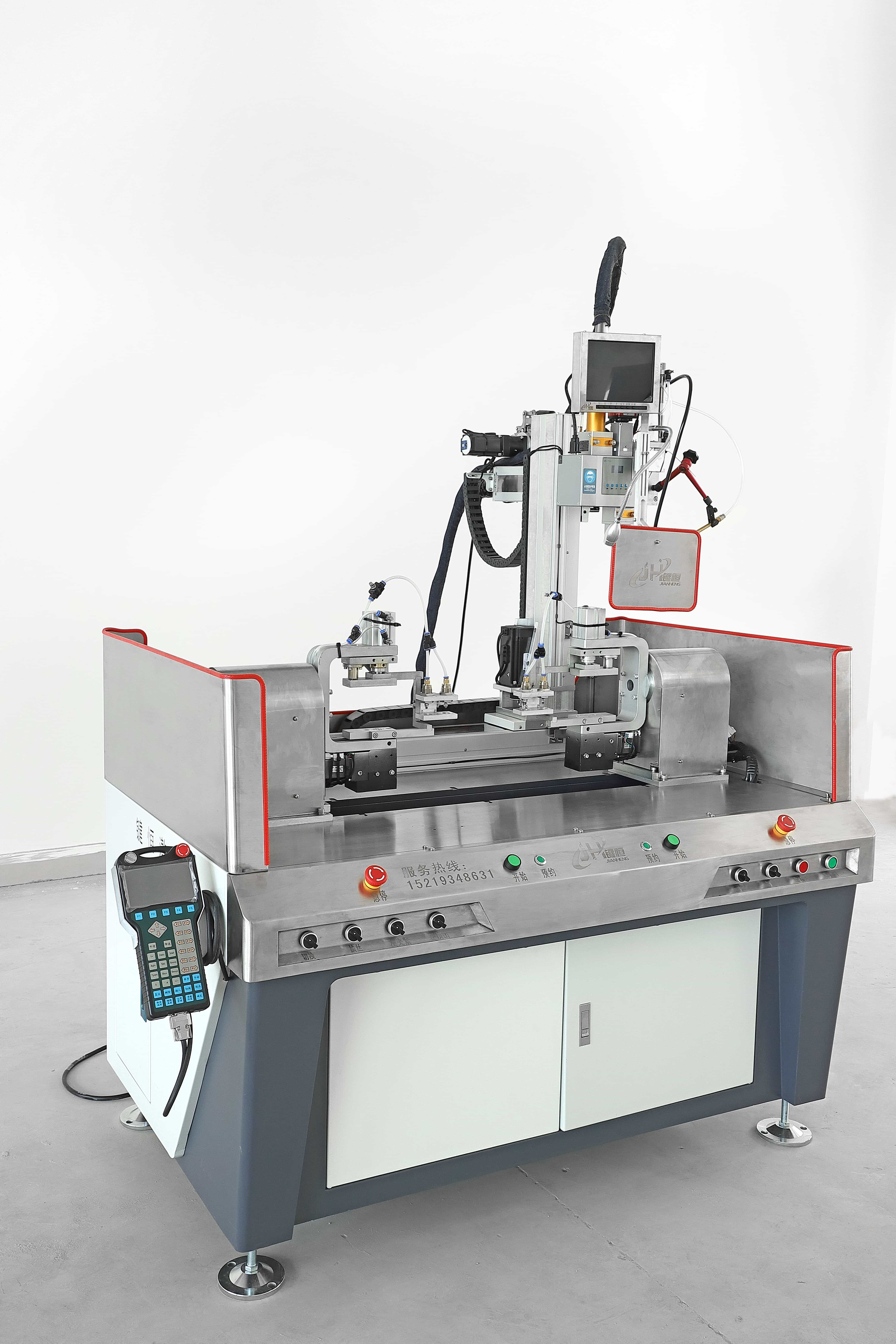
The Evolution of Automatic Laser Welding Machine in Modern Manufacturing
How Automation in Laser Welding is Transforming Production Efficiency
Laser welding automation has completely changed how manufacturing floors operate, cutting down on mistakes made by humans while speeding things up considerably. According to a study published in the European Business Review last year, plants that switched to automated laser welding saw around half fewer welding flaws and managed to get their output up by roughly a third when compared to traditional methods. What makes these systems work so well? They use those PLCs we all hear about plus constant monitoring features that keep everything within strict limits, which matters a lot in places making thousands of car parts every day. When there's no need to stop and tweak settings manually anymore, production lines can run almost non-stop. This kind of continuous operation opens doors to levels of efficiency that simply weren't possible before with all those breaks required in manual setups.
Integration of Automatic Laser Welding Machines into Automated Assembly Lines for Seamless Operations
Today's assembly lines have become heavily dependent on automated laser welders that serve as key components in their production networks. Smart software programs match welding settings to how fast the conveyor belts move, making sure everything flows smoothly from cutting parts to actual welding work and then quality checks. Take for instance an electric vehicle battery factory where they saw their production balance speed up by about 20% once they hooked up laser welding equipment with robots that handle materials around the shop floor. All this integrated automation helps prevent slowdowns in the workflow while keeping those welds consistently deep within a tolerance range of plus or minus 0.1 millimeters, even when running through thousands of operations each day.
Robotic Laser Welding Processes Enabling 24/7 Precision and Consistency
When industrial robots work alongside laser welding heads, they can hit accuracy levels down to the micron during long production cycles. Take a look at what happened in a recent DPLaser project where car part makers saw their welds stay consistent at around 99.98% for the whole 90 days they tested. The robots themselves handle problems like materials expanding when heated or tools wearing down by constantly adjusting through these feedback loops built into the system. Error rates drop under 0.2% with this setup, so factories can keep high quality control even when running all day every day for three shifts straight something regular welding just cant keep up with over time.
Automotive and Aerospace Applications: Precision, Strength, and Scalability
Laser Welding in Automotive Manufacturing: Battery and E-Mobility Component Assembly with Minimal Heat-Affected Zone (HAZ)
Automatic Laser Welding Machines deliver micron-level precision for assembling lithium-ion battery enclosures and electric vehicle (EV) motor components. By maintaining heat inputs below 50 J/cm, these systems achieve a heat-affected zone under 0.2 mm, preserving the structural integrity of aluminum and copper joints critical for energy density and thermal management.
Case Study: High-Volume Chassis Welding Using Automatic Laser Welding Machine in EV Production Lines
A leading EV manufacturer reduced chassis welding cycle times by 37% after integrating robotic laser welding cells. The high-speed automation enabled 1,200 welds per hour with <0.1 mm positional variance, meeting stringent crash-test standards while eliminating post-weld machining.
Aerospace Applications: Lightweight, High-Strength Components with Automated Laser Precision
Aerospace manufacturers leverage these systems to weld titanium fan blades and nickel alloy turbine casings with 99.97% defect-free results. The aerospace-grade precision ensures seamless joints in fuel system components, achieving weight reductions of 15–20% compared to riveted assemblies.
Material Compatibility in Critical Environments: Metals and Thermoplastics in Aerospace Systems
Advanced laser welding processes now bond carbon-fiber-reinforced thermoplastics (CFRTP) to titanium substrates, enabling hybrid aerospace structures that withstand -55°C to 300°C operational extremes. This dual-material capability reduces component counts in avionics housings by 60% while maintaining EMI shielding effectiveness.
Medical and Electronics Manufacturing: Micro-Precision and Reliability
Laser Welding in Medical Devices: Micron-Level Accuracy for Implants and Surgical Tools
Laser welding machines now achieve under 0.05 mm accuracy when making medical devices, which is exactly what the FDA requires for implantable parts and surgical tools. The latest tech breakthroughs mean companies can actually weld those tricky titanium spinal rods and stainless steel instruments without messing up their biocompatible properties. According to research published last year, these automated systems cut down on the time needed for cleaning after welding by around 40 percent compared to older techniques, all while keeping everything sterile. This kind of efficiency makes a big difference in production lines where every second counts and contamination risks must be minimized at all costs.
Hermetic Sealing of Medical Implants Using Automated Laser Welding for Long-Term Reliability
The robotic laser welding technique can reach hermeticity levels above 1e-9 Pa·m³/s when applied to pacemakers and neurostimulator devices. Such high sealing performance stops fluids from getting inside these medical implants, which need to last at least 15 years without failing. For patients who rely on these life-saving devices, this kind of protection is absolutely essential. When manufacturers switch to automated welding systems, they remove the risk of human mistakes in creating consistent weld paths. Tests show this approach cuts down seal failures by around two thirds during accelerated aging experiments conducted according to ISO 13485 quality standards.
Precision Welding in Electronics: Enabling Miniaturization of Sensors and Circuit Components
Automatic Laser Welding Machines enable 0.2 mm joint widths in consumer electronics, allowing 37% smaller IoT sensors without compromising signal integrity. Leading manufacturers use pulsed fiber lasers to assemble micro-circuit boards with heat inputs below 10 J/cm², preventing damage to adjacent components.
Case Study: Automated Laser Welding of Smart Device Sensors With Sub-Millimeter Accuracy
A Tier 1 automotive supplier achieved 99.998% weld accuracy in LiDAR sensors using a robotic laser system. The CNC-integrated workflow reduced thermal distortion by 81% compared to manual soldering, enabling sub-0.5 mm alignment tolerances required for autonomous vehicle safety systems.
Expanding Material Frontiers: From Metals to Thermoplastics and Composites
Laser welding machines that operate automatically are pushing what was once thought impossible when it comes to materials. They can now join together thermoplastics and composite materials that people used to say couldn't work with laser fusion techniques at all. The latest models produce weld seams as narrow as 0.2 mm in materials like glass fiber reinforced plastics and carbon fiber composites, which represents roughly double the precision compared to older technology from just a few years back. For manufacturers who need lightweight parts but still want them strong enough for serious applications, this development is game changing. We're seeing these advanced welds show up everywhere from high performance bicycle frames to interior panels in commercial aircraft where weight savings matter most.
Material compatibility beyond metals: Advances in laser welding of thermoplastics and composites
The latest advances in automated laser welding technology have made it possible for manufacturers to bond different materials such as PEEK and various polyamide composites with nearly perfect results around 98% efficiency in most cases. Traditional methods using glue or mechanical fasteners just can't match what laser welding does here. The process actually forms molecular level connections that hold up even when exposed to really harsh conditions from minus 40 degrees Celsius all the way up to 300 degrees Celsius. What's more, these bonds maintain tight dimensional control throughout manufacturing. Car makers are already putting this to good use on their production lines, particularly when making those critical battery cooling plates for electric vehicles. They get completely leak free seals while keeping production moving at impressive speeds over twelve meters per minute in many factories today.
Emerging applications in jewelry, consumer goods, and other high-precision industries
In the jewelry world, robotic laser welding has become standard practice for fixing platinum alloys and those tricky titanium watch parts. The machines can work at around 50 microns precision, which makes them about ten times better than regular TIG welding methods. Meanwhile, consumer electronics companies have started using automated systems to create watertight seals on medical grade polymer casings for implants. They're hitting pretty impressive numbers too, though not quite 100% flawless across their 2.5 million annual production run. What these developments show is that automatic laser welding tech is changing game rules in sectors where materials need to bend but not break, and where tiny details make all the difference between staying competitive or falling behind in today's markets.
Strategic Advantages and Future Trends of Automatic Laser Welding Machines
Cross-Industry Benefits: Consistency, Speed, and Reduced Distortion Across Automotive, Aerospace, Medical, and Electronics
Laser welding machines have really transformed how industries approach manufacturing, cutting down distortion by almost 90% when compared to traditional arc welding methods. Take the automotive sector for example these advanced systems can position battery cells within just 0.1 millimeters accuracy while still moving at impressive speeds around 12 meters per minute. The aerospace industry has also benefited greatly from this tech as it allows them to produce those flawless Class A surfaces on tough materials like titanium without needing any extra polishing after welding. And let's not forget about medical devices either manufacturers working on pacemakers are seeing incredible results with their welds holding tight at an astonishing 99.98% reliability rate. What makes this even better is that they manage to keep heat levels under control typically below 50 degrees Celsius so nothing gets damaged during the process which matters a lot when dealing with delicate electronic components inside these life saving devices.
Balancing Cost and ROI: High Initial Investment vs. Long-Term Efficiency Gains
While automatic systems require $200k–$500k upfront investment, manufacturers typically recover costs within 6–18 months through:
- 65% reduction in rework costs
- 40% faster cycle times
- 90% lower energy consumption per weld
A 2024 market analysis projects 9.02% annual ROI growth through 2033, driven by 24/7 operational capabilities and AI-powered quality assurance systems.
Future Outlook: AI-Driven Monitoring and Predictive Maintenance in Robotic Laser Welding Systems
Leading plants now integrate neural networks that:
- Predict lens contamination 48 hours before optical degradation
- Auto-calibrate beam parameters for 237 material combinations
- Reduce unplanned downtime by 78% through vibration pattern analysis
A recent Industry 4.0 implementation demonstrated 34% faster weld parameter optimization using quantum computing-assisted simulation models, signaling the next leap in laser joining technology.
FAQs About Automatic Laser Welding in Modern Manufacturing
What is the main advantage of automatic laser welding over traditional methods?
Automatic laser welding drastically reduces errors and increases efficiency by allowing continuous operation, hence boosting production rates while maintaining high quality standards.
How does laser welding benefit the automotive and aerospace industries?
In the automotive industry, laser welding provides precision in component assembly, particularly for EV batteries and chassis, with minimal heat impact. In aerospace, it ensures high-strength and lightweight components with defect-free results, contributing to weight reduction and performance enhancement.
Is laser welding applicable in medical device manufacturing?
Yes, automated laser welding offers the precision required for producing medical devices such as implants and surgical tools, improving accuracy while maintaining biocompatibility and sterility.
What materials can be joined using automatic laser welding techniques?
Modern laser welding systems can join a variety of materials, including metals like titanium and aluminum, thermoplastics, and composites, enhancing compatibility and application range across industries.
What are the economic benefits of investing in automatic laser welding machines?
Despite high initial costs, manufacturers typically see ROI through reduced rework costs, faster production cycles, and lower energy consumption, often recovering the investment within 6 to 18 months.

