
 EN
EN



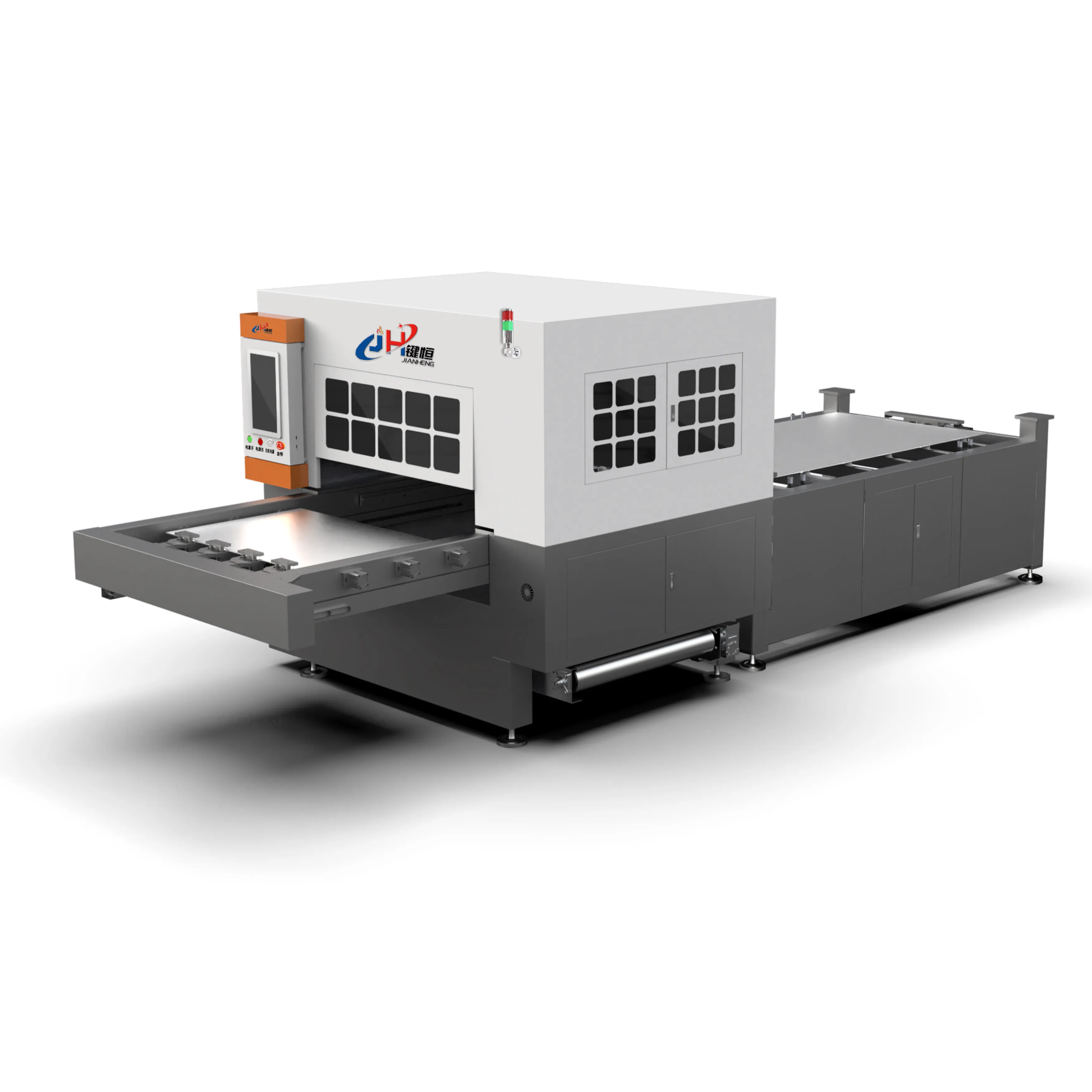
How CNC Automation Ensures Precision and Consistency in Laser Welding
The Role of Automatic Laser Welder Systems in Ensuring Uniformity
Laser welders that run automatically bring together the precision of CNC technology with sensor systems that constantly check what's happening during the process, which cuts down on mistakes made by people working manually. The machines tweak things like how focused the laser beam is and how much power it delivers while they're actually welding, depending on how thick the material happens to be at any given moment. This keeps those weld seams pretty consistent too, staying within about half a tenth of a millimeter difference either way. For places where getting things right matters a lot, such as making parts for airplanes, these kinds of systems really shine. According to checks done last year, when fixing turbine blades with lasers controlled by computers, there were practically no defects at all – somewhere around 99.8 percent came out perfect every time.
Achieving Precision Through Data-Driven Process Control
With CNC automation, important welding parameters like pulse duration ranging from 50 to 500 milliseconds and beam diameters between 0.2 and 2 millimeters get converted into actual code that can be run on machines. This allows for the same quality results no matter how many times the operation runs. Some of the more sophisticated systems now use artificial intelligence to monitor what's happening during welding through infrared thermal imaging. The AI then makes adjustments to the energy being delivered while the weld is still happening. According to research published in the Journal of Manufacturing Processes last year, this approach cuts down on those pesky porosity issues by around two thirds when compared to what happens with traditional manual welding techniques.
Human Skill vs. Automated Precision: Quality and Reproducibility
Even under ideal conditions, skilled welders typically achieve ±0.1 mm accuracy, whereas CNC laser systems maintain a superior ±0.03 mm positional repeatability regardless of shift length or production volume. This consistency directly impacts yield: in high-volume electronics manufacturing, automation reduces scrap rates from 5.2% with manual processes to just 0.7%.
Tight Tolerance Management Across Production Batches
After setting parameters at around 2 kW power output and about 120 mm/s travel speed, most modern CNC systems will actually lock these settings digitally so they don't drift during operation. Pairing this setup with digital twin technology makes all the difference. Production runs show variations below 0.1% in how deep the weld penetrates metal. That kind of consistency matters a lot when manufacturing parts like automotive battery trays where uniform quality needs to last through entire production cycles lasting months on end.
CNC and Robotic Integration: Seamless Control in Automated Laser Welding
Understanding CNC-Based Welding Automation Architecture
Computer Numerical Control systems take those digital designs from CAD programs and turn them into exact movement instructions for robots and lasers as they work. The whole system works together so that all the welding routes, power levels, and movements across multiple axes happen smoothly without anyone needing to step in manually. Take for example when the machine needs to weld along tricky seams. The software automatically changes how much gas flows through and where the laser beam focuses itself. This keeps everything aligned down to tiny fractions of a millimeter, even when working on parts that aren't straight or regular shaped. Such precision makes a big difference in quality control for manufacturers dealing with complex geometries.
Synchronization of Motion and Laser Output via CNC Commands
The coordination between robotic arm motions and pulsed laser output happens through G-code and M-code programming, allowing for adjustments in power delivery down to the millisecond level thanks to those joint geometry sensors. Without this kind of synchronization, welders often run into problems like undercutting where metal doesn't properly fuse, or worse yet, burn-through which destroys the workpiece entirely. Looking at recent research from the European Business Review in 2023, shops that integrated CNC systems saw their weld accuracy jump by around 52% when compared to traditional hand welding methods, especially noticeable in places with heavy production volumes.
Six-Axis Robotic Arms for Complex Joint Welding Applications
Robotic arms with six axes and around 0.02 mm repeatability tackle complex jobs like welding those tricky aerospace honeycomb structures and EV battery casings. When paired with rotating positioners and lasers that adjust their focus on the fly, these machines keep the laser beam at just the right angle even when working on curved surfaces. Most shops now rely on simulation software for programming instead of old school teach pendants. The difference is pretty significant actually, with setup times dropping roughly 40% according to what manufacturers report in their case studies. This makes sense because nobody wants to spend hours manually teaching robots every possible movement.
Case Study: Automotive Component Manufacturing with CNC-Robotic Lasers
A Tier 1 automotive supplier implemented CNC-robotic laser welders for electric vehicle battery enclosures in 2023. Integrating vision-based seam tracking with closed-loop thermal management, the system achieved 0.1 mm weld consistency across 500,000 units. This reduced post-weld inspection costs by 34% and increased throughput to 87 enclosures per hour – performance unattainable with manual TIG welding.
Programming the Automatic Laser Welder for Optimal, Repeatable Performance
From CAD Model to Executable Weld Path: Digital Workflow Integration
Today's automatic laser welders rely on CAM software to turn those CAD designs into actual weld paths, basically connecting the dots between what gets designed on screen and how it gets made in reality. What makes this setup so good is that it cuts down on programming mistakes because the geometry just gets turned straight into commands for the machines. When materials vary in thickness, these systems figure out the best angles for the laser beam and adjust how much energy gets applied where. Industrial users report getting positioning accuracy around plus or minus 0.02 mm according to recent research published in the Journal of Manufacturing Systems back in 2023. That kind of precision really matters when making high quality products consistently across batches.
User-Friendly Interfaces in Modern Laser Welding Programming
Touchscreen interfaces and visual programming environments allow operators to modify weld sequences without coding expertise. Preconfigured settings for common materials like stainless steel and aluminum reduce setup time by 37%. Adaptive parameter presets further streamline operations by adjusting beam focus and pulse duration in response to real-time material feedback.
Real-Time Monitoring and Adaptive Feedback Loops
Closed-loop control systems continuously monitor weld penetration using infrared sensors and coaxial cameras. If deviations exceed 5% tolerance thresholds, the system self-corrects power output within 50 milliseconds. This rapid adjustment maintains less than 0.1 mm variation in weld bead geometry throughout extended production cycles.
Balancing Flexibility and Complexity in Automated System Programming
Automatic laser welders come packed with more than 150 adjustable settings, but don't worry - most systems have simplified programming options that make switching between jobs much faster. The modular design lets factories store their tested weld recipes, including things like gas pressure settings and pulse frequencies, while keeping important factors such as focal position locked down. And there's something else worth mentioning: OPC UA protocols work great for connecting these machines directly to enterprise MES systems. This connection helps track every step of production from start to finish and keeps all workflows properly synchronized across the factory floor.
Adaptive parameter presets and closed-loop control systems demonstrate how modern programming ensures consistent weld quality without sacrificing operational agility.
Controlling Critical Welding Parameters for Guaranteed Quality
Key Laser Welding Parameters: Power, Speed, Focus, and Pulse Shape
Getting good results from laser welding really comes down to getting four main factors just right. These include the power level which usually ranges between 500 to 6,000 watts, how fast the laser moves across the material at speeds from half a meter per minute up to 20 meters per minute, where exactly the laser beam is focused with a tolerance window of plus or minus 0.1 millimeters, and also the way the laser pulses are modulated. Looking at industry reports from last year, it turns out that about one third of all welding flaws in automated setups actually stem from incorrect focus positioning. That's why newer equipment incorporates servo controlled Z axis mechanisms these days. These systems keep the focal point stable within around 50 micrometers of variation, which makes a big difference especially when dealing with irregular workpieces that aren't perfectly flat.
| Parameter | Tolerance Range | Impact on Weld Quality |
|---|---|---|
| Power Density | ±2% | Penetration depth consistency |
| Pulse Frequency | ±5 Hz | Overlap uniformity in seam welds |
| Gas Flow Rate | ±0.5 L/min | Porosity prevention in reactive metals |
Closed-Loop Sensors and AI-Driven Parameter Adjustments
Modern welding systems now come equipped with these fancy multispectral plasma sensors that look at emissions across eight different wavelength ranges. The data collected from these sensors gets fed into some pretty sophisticated machine learning algorithms. According to research published in the Journal of Manufacturing Systems last year, these models can actually predict how deep the weld will penetrate with nearly 99% accuracy. Pretty impressive stuff. And here's what happens when things start going off track: if the system detects any deviation beyond about 50 micrometers, it jumps into action. Within just 15 milliseconds - which is way faster than anyone can react manually - the system adjusts both power levels and travel speed automatically. This kind of real time correction makes all the difference in maintaining consistent weld quality on production lines.
Parameter Locking for Repeatable, High-Quality Welds
After validation through statistical process control protocols, manufacturers apply digital parameter locking to preserve optimal settings. This ensures a batch-to-batch variation rate of just 0.02% (Automotive Welding Consortium, 2023). Password-protected access restricts modifications to certified engineers, enhancing process integrity.
Digital Storage for Rapid Product Changeover and Traceability
Modern welding controllers are capable of storing over 5,000 different parameter settings complete with detailed revision tracking. When workers scan QR codes on parts, these systems instantly pull up the correct welding parameters, cutting down setup times dramatically. What used to take almost an hour now happens in less than two minutes according to recent industry reports. For companies needing long term compliance, these systems use cryptographic hashing techniques to secure all weld documentation. The resulting records cannot be altered or deleted, which satisfies strict AS9100D requirements for keeping manufacturing data intact for at least fifteen years. This level of security is particularly important in aerospace applications where traceability remains critical throughout product lifecycles.
Speed, Efficiency, and End-to-End Integration in Manufacturing Workflows
Maximizing Throughput with Automatic Laser Welder Units
Automatic laser welders controlled by CNC technology can run around the clock without compromising on weld quality, which means factories see anywhere from 30 to 50 percent better output compared to what workers achieve manually. These machines are pretty fast too, some models welding at speeds as high as 300 millimeters per second, making them ideal for places that need to produce large quantities quickly. What makes these systems stand out is their built-in sensors that watch for changes in materials as they work and tweak the power levels automatically. This real-time adjustment stops defects before they happen, all without stopping the production line. For industries such as aerospace manufacturing, this kind of continuous operation really matters because every hour saved translates directly into shorter delivery periods for customers waiting on critical components.
Reducing Downtime Through Predictive Maintenance
Machine learning algorithms analyze laser diode degradation, cooling system efficiency, and motion component wear to predict maintenance needs. This predictive approach cuts unplanned downtime by 60–75% compared to fixed schedule maintenance (Ponemon, 2023). Some systems even initiate part reorders autonomously, minimizing disruptions before failures occur.
Integrating Laser Welding into Assembly Lines and Digital Workflows
Modern automatic laser welders work hand in hand with CAD/CAM systems so operators can update programs on the fly, link up with ERP systems to track materials throughout production, and connect to IIoT networks that keep all processes in sync across the factory floor. When these systems are properly integrated, they cut out all the tedious manual data entry tasks and slash changeover times between different manufacturing runs by around 80-85%, which makes a huge difference in auto plants where time is money. According to studies in industrial automation, when CNC laser welding cells are fully connected to MES platforms, they hit impressive first pass yields of about 99% or better. That kind of performance means fewer rework cycles and significant cost savings over time for manufacturers who invest in these smart welding solutions.
FAQ
What are the advantages of using CNC automation in laser welding?
CNC automation ensures precision and consistency, reduces manual errors, and allows for real-time adjustments, significantly improving weld quality and efficiency.
How does CNC integration enhance robotic laser welding?
CNC integration allows seamless control of robotic movements and laser outputs, resulting in precise and repeatable welds even on complex geometries.
How do modern laser welders ensure quality across production batches?
Modern laser welders utilize digital twin technology and parameter locking to maintain tight tolerance management and consistent quality across batches.
What technologies are used to monitor welding processes in real-time?
Technologies such as infrared sensors, coaxial cameras, and AI-driven closed-loop systems monitor weld processes and make instantaneous adjustments for optimal results.
How do automatic laser welders contribute to increased manufacturing throughput?
With high-speed operations and predictive maintenance, automatic laser welders reduce downtime and increase output, achieving better efficiency and faster production.

