
 EN
EN



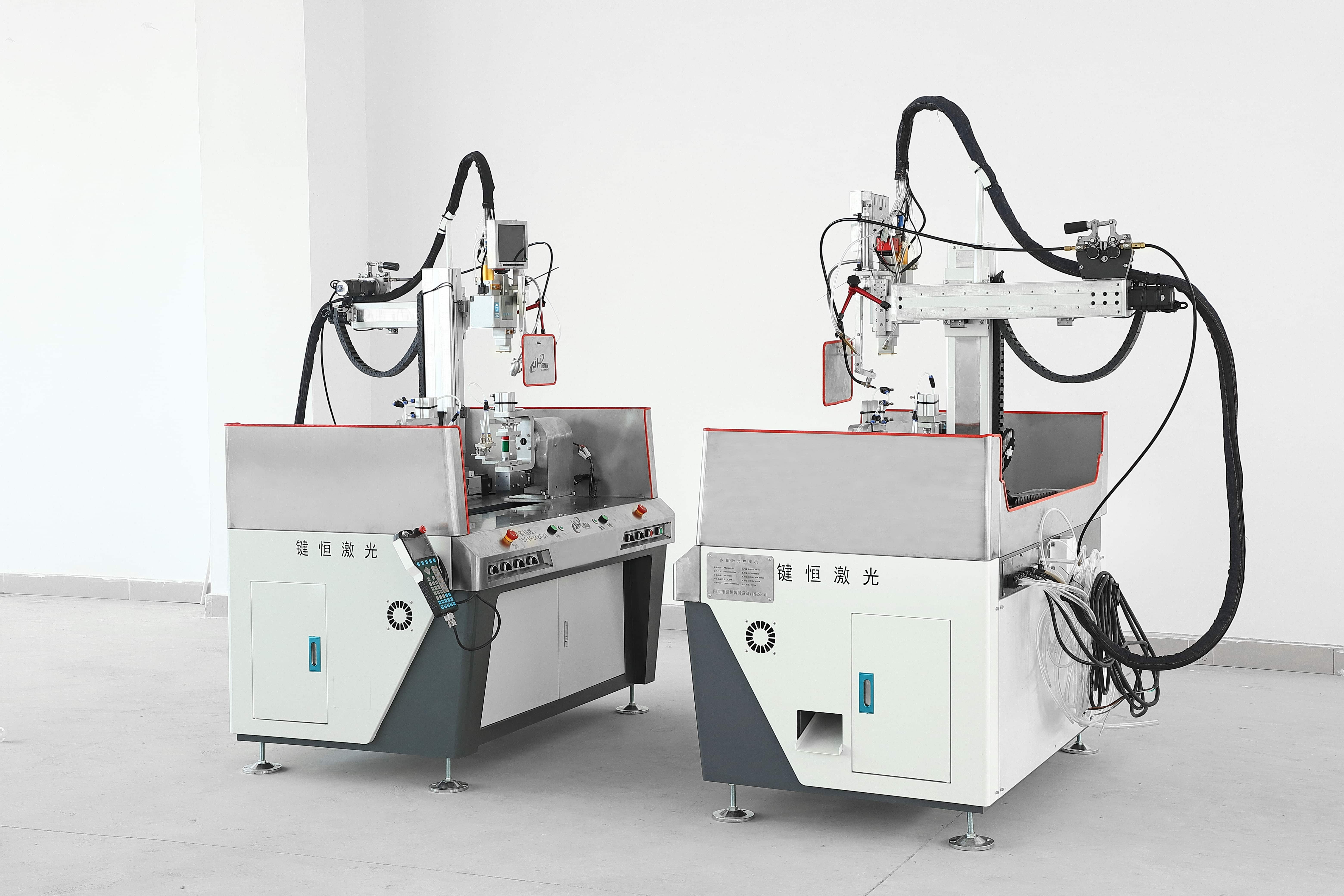
Automation and Robotic Integration for Seamless Production with Automatic Laser Welding Machine
The Role of Automation Capabilities in Automatic Laser Welding Machine Efficiency
Automatic laser welding machines today can complete cycles about 30 percent faster than their manual counterparts thanks to PLCs and those fancy closed loop feedback systems we've been hearing so much about lately. The real magic happens when these machines run non stop with pretty impressive repeat accuracy around plus or minus 0.1 mm, which matters a lot for making thousands of identical parts needed in planes and cars. Looking at recent studies from 2023 on lean manufacturing methods, factories that switched to automation saw a massive drop in errors caused by humans working the machines down to just 33% of what they used to be. Plus, these systems keep running efficiently most of the time, wasting only about 1.5% of their energy even after hours of continuous operation.
Integration with Robotics and AI-Powered Machine Vision for Adaptive Welding
Top manufacturers are increasingly pairing six-axis robotic arms with artificial intelligence vision systems when dealing with tricky joint configurations. The real magic happens when thermal imaging kicks in during operation, adjusting power levels every 5 milliseconds or so. This prevents those pesky burn-through issues we see on thin materials such as 0.8mm stainless steel sheets. Looking at recent Industry 4.0 implementation reports, these smart welding setups hit first pass success rates above 99.2% even when working with different material combinations. And it gets better still. According to 2024 connectivity standards, factories using these integrated systems report around 40% quicker setup times thanks to improved communication between machines and robots throughout the production line.
Case Study: Automated Workcell Implementation at Yangjiang Jianheng Intelligent Equipment Co LTD
A Chinese automotive supplier reduced cycle times by 34% after deploying 12 interconnected laser welding cells with centralized monitoring. The system's automated fixturing and plasma removal modules enabled 24/5 production of EV battery trays with 0.05mm positional consistency. Uptime reached 94.6% in Q1 2024—22% above industry averages for manual welding stations.
Trend Analysis: The Shift Toward Fully Autonomous Laser Welding Cells
The global market for autonomous welding cells will grow at 18.4% CAGR through 2028, driven by advancements in edge computing and predictive maintenance algorithms. New systems now self-calibrate during material changes using spectral analysis—a capability reducing setup times by 73% compared to 2020-era models.
How Robotic Integration Enhances Scalability and Uptime
Single machines equipped with automated tool changers and pallet loading systems can now manage over 19 different welding setups without needing hands-on adjustments. The dynamic scheduling software works behind the scenes to figure out the best beam paths as things happen, which cuts down on argon gas usage by around 92 percent thanks to better localized shielding. For manufacturers looking to move their operations from small test runs to full scale production, these capabilities make all the difference. They keep those critical weld penetration characteristics consistent throughout the entire process, something that was much harder to achieve before this technology became widely available.
Precision Control and Real-Time Quality Monitoring
Modern automatic laser welding machines achieve micron-level precision through closed-loop beam control and instant quality verification systems. This combination ensures consistent weld integrity while adapting to material variations and production demands.
Achieving Micron-Level Accuracy with Advanced Beam Control Technology
Adaptive optics and high-speed galvanometer scanners maintain ±5μm positioning accuracy across weld seams up to 1.5 meters. Beam-shaping technologies dynamically adjust focal spot size from 20μm to 300μm, enabling precision welds on everything from medical microcomponents to thick-section automotive parts.
Minimizing Thermal Distortion Through Dynamic Heat Input Management
Closed-loop thermal management systems modulate laser power 20,000 times per second using infrared feedback. This prevents warping in thin aerospace alloys by limiting temperature variance to ±12°C, even during 8kW peak power operations.
Inline Monitoring Systems for Instant Defect Detection and Diagnostics
Coaxial cameras and spectroscopic sensors analyze weld pools at 50,000 fps, identifying porosity or cracks within 0.5mm resolution. As demonstrated in real-time welding studies, these systems integrate with predictive quality platforms to auto-adjust parameters when deviations exceed ISO 13919-1 standards, reducing scrap rates by 27% in high-mix production.
High-Speed Performance with Material and Thickness Flexibility
Modern automatic laser welding machines combine rapid processing speeds with broad material adaptability, enabling manufacturers to handle everything from thin-gauge aerospace alloys to thick industrial components. This dual capability addresses the growing demand for agile production systems that maintain precision across diverse applications.
Adjustable Welding Speeds for Diverse Materials and Gauges
Advanced systems achieve 30–300 mm/s welding speeds through adaptive power modulation, accommodating materials ranging from 0.5 mm stainless steel to 8 mm aluminum. Real-time feedback loops automatically adjust parameters when switching between reflective metals like copper and engineered alloys, reducing setup time by 60% compared to fixed-speed systems.
Optimizing High-Speed Welding Without Compromising Joint Integrity
Pulsed laser techniques maintain <0.1 mm heat-affected zones (HAZ) even at maximum speeds, critical for heat-sensitive electronics enclosures and medical device manufacturing. Dynamic beam oscillation patterns compensate for thermal distortion, achieving consistent penetration depths within ±0.05 mm tolerance levels.
Data Insight: Fiber Laser Speed Advantages Over Traditional Welding Methods
Fiber laser systems demonstrate 2.7× faster processing speeds than conventional TIG welding in automotive battery tray production, while reducing energy consumption by 45% (Manufacturing Technology Insights, 2023). This efficiency stems from 1070 nm wavelength optimization for metals, enabling faster photon absorption and vaporization thresholds.
Energy Efficiency, Safety Compliance, and Operating Cost Reduction
Why Fiber Laser Systems Outperform CO₂ in Energy Efficiency and Maintenance Costs
Fiber laser systems actually use around 30 to 50 percent less energy compared to those old CO2 based automatic welding machines, even though they put out just as much power. The latest numbers from laser tech reports in 2024 back this up. What makes them so efficient? Well, their solid state construction means no need for refilling gases, which cuts down on maintenance expenses quite a bit. Some shops report saving nearly $18k each year on maintenance alone when switching over. And let's face it, nobody wants to spend time aligning mirrors or dealing with resonator issues every few weeks. Fiber lasers just keep going strong with good beam quality for tens of thousands of operating hours without all that hassle.
Long-Term ROI Through Lower Power Consumption and Reduced Downtime
The energy-efficient profile of modern automatic laser welding machines creates compounding savings, with operators reporting $740k annual reductions in utility costs (Ponemon 2023). Advanced thermal management systems prevent overheating-related shutdowns, sustaining 92% uptime versus 78% in conventional systems. This reliability enables manufacturers to reallocate 15% of maintenance budgets toward process optimization initiatives.
Critical Safety Features: Interlocks, Enclosures, and ISO 13849 Compliance
Top tier systems these days typically feature three main safety layers. First there are those pressure sensitive floor mats that detect when someone steps into restricted areas. Then we have light curtain barriers which create invisible walls around dangerous zones. And finally most setups include dual channel emergency stops that meet ISO 13849 standards for Performance Level d. Looking at industry data from last year, factories that switched to certified automatic laser welders saw about a two thirds drop in accidents versus places still running older gear without proper certification. Another important factor is sealed enclosures for the lasers themselves. These come equipped with built in smoke extractors that kick on automatically during intense welding sessions, keeping harmful fumes away from workers breathing zone.
Versatile Material Compatibility for Complex Manufacturing Needs
Technical Parameters Affecting Material Compatibility in Automatic Laser Welding Machines
Modern laser welding systems handle materials ranging from 0.5 mm-thin aerospace alloys to 12 mm-thick tool steels by precisely adjusting three technical parameters:
- Beam quality (BPP ≤ 2.0 mm·mrad for reflective metals)
- Power density (10⁷–10⁸ W/cm² for copper vs. 10⁶ W/cm² for plastics)
- Pulse duration (0.5–20 ms adjustments for dissimilar metal joints)
A 2023 Fraunhofer Institute study found systems with adaptive beam shaping achieve 98.2% weld consistency across 47 material combinations compared to 81.4% in fixed-parameter machines. This flexibility proves critical for precision metal fabrication applications requiring seamless transitions between stainless steel, titanium, and engineered thermoplastics.
Welding Dissimilar and Reflective Metals with Precision and Stability
Advanced systems overcome two persistent challenges:
- Thermal mismatch in aluminum-copper joints through real-time heat input modulation
- Beam reflectivity in polished surfaces via 1070 nm wavelength optimization
Recent field data shows 0.03 mm positional accuracy in 304L-316L stainless steel welds and 99.8% first-pass yield rates for copper-nickel battery components—a 40% improvement over earlier generation systems. Operators achieve this stability through closed-loop monitoring of weld pool dynamics and automatic nozzle distance compensation.
Frequently Asked Questions (FAQ)
What are the benefits of integrating robotics into laser welding?
Robotic integration in laser welding enhances precision, scalability, and uptime by allowing adaptable configurations and consistent performance without manual intervention.
How does AI-powered machine vision enhance welding processes?
AI-powered machine vision ensures adaptive welding by using thermal imaging for power adjustments, preventing defects such as burn-through issues in thin materials.
Why are fiber laser systems more efficient than CO2 systems?
Fiber laser systems are more efficient due to their solid-state construction, which eliminates the need for refilling gases and reduces maintenance costs.
How do modern laser welding machines achieve precision?
They use closed-loop beam control and quality verification systems for micron-level precision, ensuring consistent weld integrity even with material variations.

