
 EN
EN



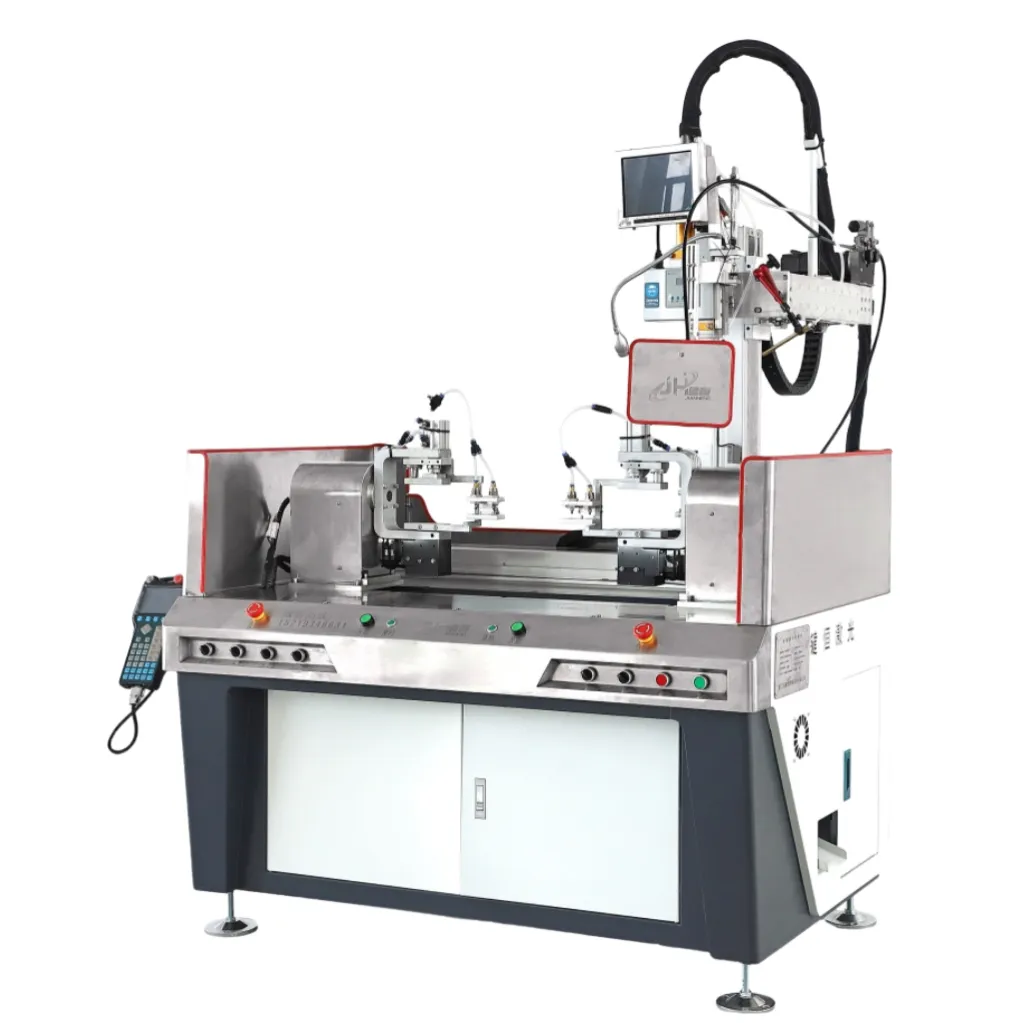
Understanding ROI and Long-Term Financial Benefits of an Automatic Laser Welder
Key Components of ROI in Laser Welding Technology Investments
Calculating ROI for an automatic laser welder requires analyzing three primary factors:
- Upfront costs – Equipment pricing typically ranges between $150k–$300k, with higher-end systems offering advanced automation features.
- Recurring savings – A 2024 industry analysis shows laser systems reduce labor expenses by 35–50% compared to manual welding through 24/7 operational capabilities.
- Production volume – High-throughput manufacturers achieve faster ROI due to energy efficiency gains (up to 40% less power consumption) and reduced material waste.
| ROI Factor | Traditional Welding | Automatic Laser Welder |
|---|---|---|
| Annual Labor Costs | $75,000 | $40,000 |
| Energy Consumption | $18,000 | $10,500 |
| Scrap/Waste Reduction | 12% | 3% |
| Data reflects median values from recent case studies of mid-sized manufacturers. |
Typical ROI Timeframes for Automatic Laser Welder Systems
For most companies, getting their money back takes somewhere between 18 to 36 months, though this varies quite a bit based on how big their operation is. Take those high volume auto parts makers for instance they typically hit breakeven within just 24 months or so. Why? Because they cut around fifty grand worth of annual rework expenses while increasing production levels by nearly two thirds. The story gets a little different for smaller shops though. Sheet metal fabricators tend to see returns after about 30 months give or take, even when running only one shift per day according to what was found in last year's fabrication efficiency study published in early 2024.
Long-Term Financial Advantages Over Traditional Welding Methods
Over a 5-year period, laser systems generate 3–4x greater cumulative savings than MIG/TIG welding through:
- 90% reduction in post-weld processing time
- 70% lower maintenance costs (no consumable electrode replacements)
- 50% longer equipment lifespan due to reduced thermal stress on materials
This cost differential widens further when factoring in compliance benefits–laser welding produces 85% fewer emissions than arc-based methods, minimizing potential regulatory penalties.
Cost Efficiency: Reducing Operational and Maintenance Expenses
Lower Labor Costs Through Automation with the Automatic Laser Welder
Factories that have switched to automatic laser welders are seeing big savings on labor costs, somewhere around 30 to maybe even 50 percent when compared with old school manual welding methods. These automated systems take care of all those boring repetitive jobs such as moving materials around and setting up the welding paths, which means companies don't need as many workers on staff anymore but still get products made consistently. What's really interesting is how one person can watch over several machines at once now. This change cuts down what employers spend on wages significantly, yet they're able to keep making just as much stuff as before without any drop off in quality or quantity.
Energy Efficiency and Reduced Power Consumption in Laser Welding
Modern laser welders consume 20% less energy than traditional TIG/MIG systems, according to the 2024 Industrial Energy Report. Key innovations like adaptive power modulation and idle-mode activation minimize electricity usage during non-peak cycles.
| Feature | Traditional Welding | Laser Welder |
|---|---|---|
| Avg. Power Draw | 8.2 kW | 5.1 kW |
| Cooling Requirements | Water-intensive | Air-cooled |
This efficiency not only lowers utility bills but also aligns with sustainability initiatives increasingly prioritized by manufacturing clients.
Decreased Maintenance Needs and Associated Long-Term Savings
Laser welders automatically need about half as much maintenance as traditional arc welding gear because they have sealed optics and work without physical contact. The solid state parts last way longer too compared to those consumable electrodes or gas nozzles that constantly wear out. We're talking around 15 thousand hours of operation before anything actually needs replacing. A study from WorkTrek points out that all this reliability adds up to real money saved for factories of moderate size. Their calculations show somewhere between eighteen and thirty two thousand dollars each year just on spare parts and the cost of technicians coming in to fix things.
Boosting Productivity with Automated Laser Welding Systems
Increased Throughput and Operational Efficiency Using Automation
Laser welders work at around 30 mm per second, which cuts down on cycle time by about half compared to traditional arc welding methods. When these machines handle several weld points at once without needing constant tool changes, factories see roughly a third boost in production output while still keeping those weld joints solid and reliable according to recent industry data from the 2024 Automation Trends Report. What this really means for shop floors is that experienced technicians aren't stuck doing the same basic welding over and over again all day long. Instead they get moved into positions where their skills actually matter more, like checking product quality or working on new technology development projects.
24/7 Operation Capabilities and Minimized Downtime
Robotic laser welding systems eliminate human fatigue constraints, enabling continuous production schedules. Advanced diagnostics predict component wear 72+ hours before failure, reducing unplanned downtime by 89% compared to conventional systems. A leading aerospace manufacturer reported 98.5% equipment uptime during round-the-clock production of flight-critical components.
Integration with Production Lines for Seamless Workflow Enhancement
Modern automatic laser welders sync with ERP systems and material-handling robots through standardized protocols like OPC-UA. This integration allows:
| Integration Feature | Productivity Gain |
|---|---|
| Real-time job switching | 22% faster order transitions |
| Automated material tracking | 15% waste reduction |
| Predictive quality analytics | 40% fewer inspection delays |
Such interoperability eliminates manual data entry errors and synchronizes welding parameters with upstream/downstream processes.
Superior Weld Quality and Reduced Rework in Precision Manufacturing
Consistent, High-Precision Welds Enabled by Automatic Laser Welder Technology
Automatic laser welders deliver micron-level accuracy through focused beam control, achieving 99.6% weld consistency in aerospace and medical device production. Unlike manual methods prone to human variability, these systems maintain ±0.1mm positional accuracy across 10,000+ operations, eliminating heat distortion in thin-gauge materials.
Reduction in Defects, Rework, and Material Waste
Better thermal management cuts down on those pesky porosity defects by around 58% and saves companies about 32% on rework costs when compared to old school arc welding methods according to the RSI 2025 report. Lasers work wonders here too because their super focused heat doesn't damage surrounding materials as much, which means manufacturers see roughly 19% fewer scrapped parts during production of those tricky automotive battery trays. And let's not forget about all that annoying weld spatter everyone hates dealing with. According to some research from 2024 on material integrity, going automated slashes weld spatter problems by nearly 90%, so workers spend way less time cleaning up after the fact instead of constantly fighting against messy welds.
Improved Product Quality and Customer Satisfaction Outcomes
Manufacturers using laser welding report 23% fewer quality complaints and 17% faster customer approval cycles. Precision welds exceeding ISO 13919-1 standards enable compliance with stringent aerospace and EV battery certifications while strengthening brand reputation for reliability.
Real-World ROI: Industrial Automation Case Study
Implementation of Automatic Laser Welders in Industrial Manufacturing
One major manufacturing firm recently brought in automatic laser welders after struggling with tedious manual work and unpredictable weld results. When they rolled out these systems on their 12 production lines, operations ran around the clock with hardly anyone needed to watch over them. Manual welding time dropped dramatically too, cutting down those hours by nearly two thirds. What really made a difference was how accurate these machines were. Setup times shrank by almost half compared to old school techniques, which meant switching between different products happened much quicker than before. Some workers initially worried about job security, but most saw the benefits pretty quickly once things settled in.
Quantified Cost Savings, Productivity Gains, and ROI Results
Post-implementation data revealed:
- 34% lower labor costs within the first year ($2.1M saved)
- 19% higher throughput due to reduced downtime and cycle times
- ROI in 14 months–22% faster than initial projections
| Metric | Before Automation | After Automation |
|---|---|---|
| Defect Rate | 8.2% | 1.7% |
| Monthly Output | 82,000 units | 98,000 units |
| Energy Cost/Unit | $0.47 | $0.38 |
The manufacturer also eliminated $740k in annual rework costs while maintaining weld consistency within ±0.03mm tolerances. This precision directly contributed to a 31% reduction in warranty claims, demonstrating how automated laser welding systems deliver compounded financial returns as production scales.
FAQs
What does ROI of an automatic laser welder mean?
ROI stands for Return on Investment, and in the context of automatic laser welders, it refers to the financial benefits gained over time compared to the initial cost of purchasing the equipment.
How long does it take to achieve ROI for automatic laser welding?
Depending on the operation size, it typically takes between 18 to 36 months to achieve ROI when using automatic laser welders.
What are the long-term advantages of using laser welders over traditional methods?
Laser welders offer long-term financial benefits such as reduced labor costs, improved energy efficiency, and decreased maintenance needs. They also produce higher quality welds with less rework required.

