
 EN
EN



How Fiber and CO₂ Lasers Work: Core Physics and Engineering Differences for Fiber Laser Cutting Machines
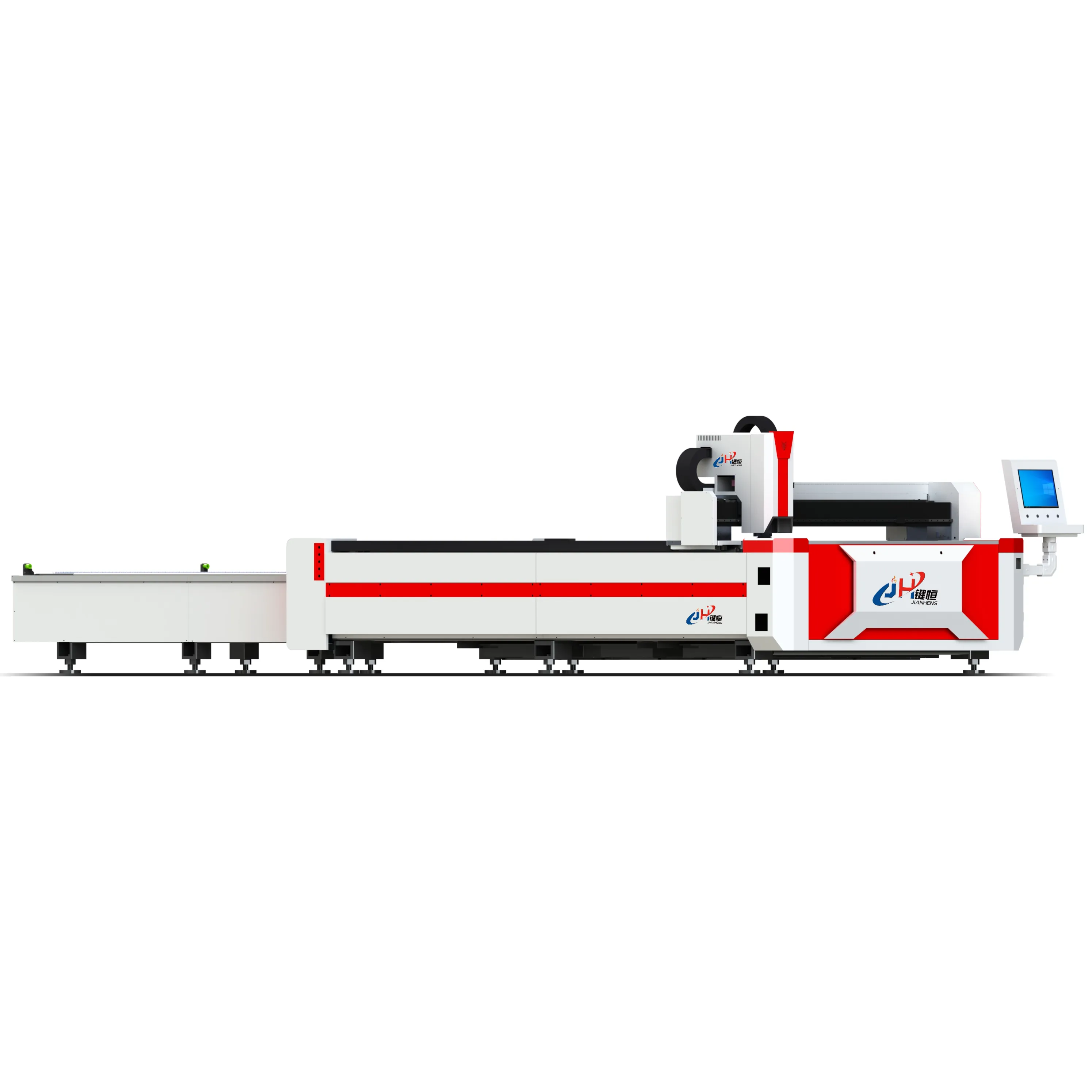
Wavelength & Absorption: Why fiber cuts metal efficiently while CO₂ excels on organics
The wavelength at which a laser operates plays a key role in how it interacts with materials. Fiber lasers work around the 1.06 micrometer mark, which is part of the near infrared spectrum. This particular wavelength gets absorbed quite well by free electrons in metal surfaces. That's why these lasers are so good at cutting through steel, stainless steel, aluminum and copper quickly and efficiently. On the other side of things, CO₂ lasers run at about 10.6 micrometers, falling into the mid infrared range. This wavelength actually matches up with vibrations found in organic molecules. For this reason, they perform really well on materials like wood, acrylics, leather and various composite materials where absorption rates often go above 95 percent. Most metals tend to bounce back over 90% of the 10.6 micrometer radiation though, whereas non metallic materials might reflect as much as 40% of the 1.06 micrometer light. There's definitely a noticeable difference between what each type can do, all stemming from basic principles of light behavior.
Laser Source Architecture: Diode-pumped fiber amplifiers vs. RF-excited gas discharge tubes
Fiber lasers work by pumping energy into ytterbium-doped silica fibers using highly efficient diodes. The result is amplified light traveling along a flexible optical path integrated within waveguides. What makes these lasers special? Their solid state construction means no need for free space optics, mirrors, or those pesky consumable gases. This setup delivers impressive wall plug efficiency above 30% plus really good beam quality that stands out compared to other options. On the other hand, CO₂ lasers function quite differently. They depend on RF excited gas discharge tubes containing a mixture of CO₂, nitrogen, and helium. When electricity hits this gas mixture, it starts exciting vibrations in the CO₂ molecules which then produce photons. These photons bounce around inside a mirrored resonator cavity until they escape as laser light. But there's a catch. Maintaining these systems involves careful mirror alignment, regular gas refills, and managing heat buildup. All these factors contribute to much lower efficiency rates between 10 and 15%, not to mention significantly increased maintenance needs over time.
Material Compatibility and Thickness Performance of Fiber Laser Cutting Machines
Metals (steel, stainless, aluminum)
Fiber laser cutters have pretty much taken over in metal fabrication shops these days. When we're talking about high power systems above 15 kW, they can slice through carbon steel as thick as 30 mm, handle stainless steel up to around 25 mm, and even manage aluminum plates at 12 mm thickness. For thinner materials under 6 mm, fiber lasers generally run about 3 to 5 times faster compared to traditional CO₂ lasers because metals absorb light better at that 1.06 micrometer wavelength. But things start getting tricky once material thickness goes past 12 mm. The edges just don't look as clean anymore. Kerf widths widen anywhere from 15% to 30%, taper angles go over 2 degrees, and those pesky bits of molten metal called dross stick to the cut more often. To deal with this, operators usually need to slow down feed rates, crank up the assist gas pressure, and sometimes resort to extra polishing or grinding for a finished look.
Non-metals (wood, acrylic, composites)
Most fiber lasers just don't work well with non-metal materials. At around 1.06 microns, these lasers tend to bounce off surfaces that conduct electricity poorly such as wood, acrylic, and composite materials made from layers. What happens next isn't pretty either. The energy doesn't couple properly with the material. Acrylic gets charred or burned in unpredictable ways, leaving behind melted or cloudy edges instead of the smooth finish possible with CO₂ lasers. Fiber reinforced plastics often suffer from layer separation issues too. That's where CO₂ lasers really shine though. Their wavelength sits at about 10.6 microns which means over 98 percent gets absorbed by organic materials. This creates cleaner cuts through vaporization rather than melting, with very little heat spreading beyond the cut area. Shops dealing with all sorts of different materials should seriously consider keeping CO₂ lasers available for those jobs where fiber simply won't cut it.
Cutting Speed, Precision, and Thermal Impact: Real-World Performance Benchmarks
Speed advantage: faster on thin metals (<6 mm), but convergence and reversal above 12 mm
When working with conductive metals thinner than 6 mm, fiber lasers really shine compared to CO₂ alternatives, usually cutting processing time down by around three to five times. The reason? Better material absorption rates combined with the ability to create much tighter focal points at the 1.06 micrometer wavelength range. Things get interesting when dealing with materials about 12 mm thick though. For some non-reflective non-metallic substances like 15 mm acrylic panels or medium density fiberboard (MDF), traditional CO₂ systems can actually perform better by approximately 15 to 20 percent. This happens because those longer wavelength photons penetrate deeper and spread more evenly through these materials at their characteristic 10.6 micrometer setting.
Edge quality metrics: Kerf width, taper, dross formation, and HAZ differences by material and thickness
Fiber lasers create much narrower kerfs and almost vertical cuts when working with thin metals because they have higher brightness and can focus light so tightly. The way these lasers concentrate their energy results in a heat affected zone (HAZ) that's about 60% smaller compared to CO₂ lasers on stainless steel materials less than 6mm thick. This makes a big difference in preserving the metal's original microstructure and keeping its corrosion resistance intact. On the other hand, CO₂ lasers aren't as accurate with metals but work really well for thicker plastics over 8mm where they leave behind smoother, shinier edges. They also tend to produce less dross when cutting organic materials since the material tends to vaporize more cleanly during the process.
Total Cost of Ownership: Fiber Laser Cutting Machine Economics vs. CO₂
Upfront cost, power efficiency , maintenance (no mirrors/gas, longer diode life), and ROI timeline
Fiber laser cutting machines typically cost about 15 to 25 percent more upfront compared to similar CO₂ systems, but many shops find they make up for this extra expense through better day-to-day performance. These fiber lasers actually use around 30 to 50% less power too. While running them costs roughly 80 cents per hour, CO₂ machines can run anywhere from $2.50 to over $3 per hour doing the same work. That's because fiber lasers convert electricity to light much more efficiently, getting over 30% efficiency versus only 10 to 15% for traditional CO₂ units. Maintenance is another big plus for fiber tech. There are no delicate mirrors needing constant cleaning or alignment, no complicated gas mixes to worry about refilling, and those diode pumps last way longer than standard CO₂ tubes which need replacing every 20,000 to 40,000 hours. Most shops spend between 3 to 8% of their machine's value on annual maintenance, but fiber lasers rarely cause unexpected shutdowns thanks to their solid build and self-aligning nature. And when we look at processing speed on thinner materials, fiber lasers cut 3 to 5 times faster than CO₂ counterparts. For most metal fabrication businesses, this means recouping that initial investment within just one to two years of operation.
FAQ
-
What materials are best cut with fiber lasers?
Fiber lasers excel at cutting metals such as steel, stainless steel, aluminum, and copper, especially for materials up to 30mm in thickness. -
Why are CO₂ lasers preferred for cutting non-metals?
CO2 lasers operate at a wavelength that absorbs well in organic materials like wood, acrylics, and composites, making them ideal for cutting such materials with smooth edges. -
How do fiber lasers compare to CO₂ lasers in terms of speed?
Fiber lasers can cut thin metals three to five times faster than CO₂ lasers due to better material absorption and tighter focus at the 1.06 micrometer wavelength. -
What are the maintenance differences between fiber and CO₂ lasers?
Fiber lasers require less maintenance, as they have a solid state design without mirrors or gas refills needed. They also benefit from longer diode life compared to CO₂ lasers. -
What are the cost implications of using fiber lasers?
Despite higher upfront costs, fiber lasers offer lower power consumption and maintenance costs, often leading to ROI within one to two years.

