
 EN
EN



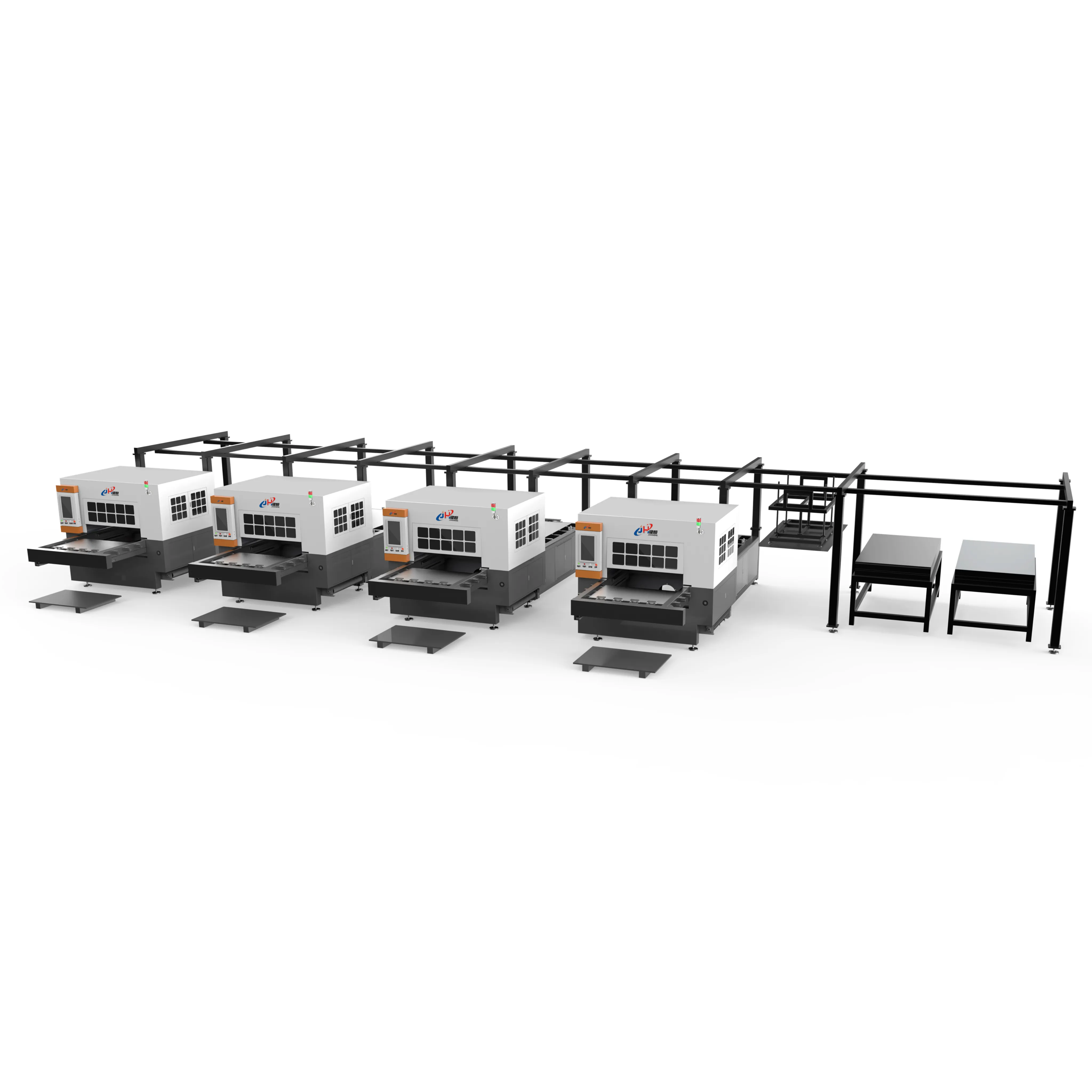
How Fiber Laser Cutting Machines Work: Core Physics and Precision Engineering
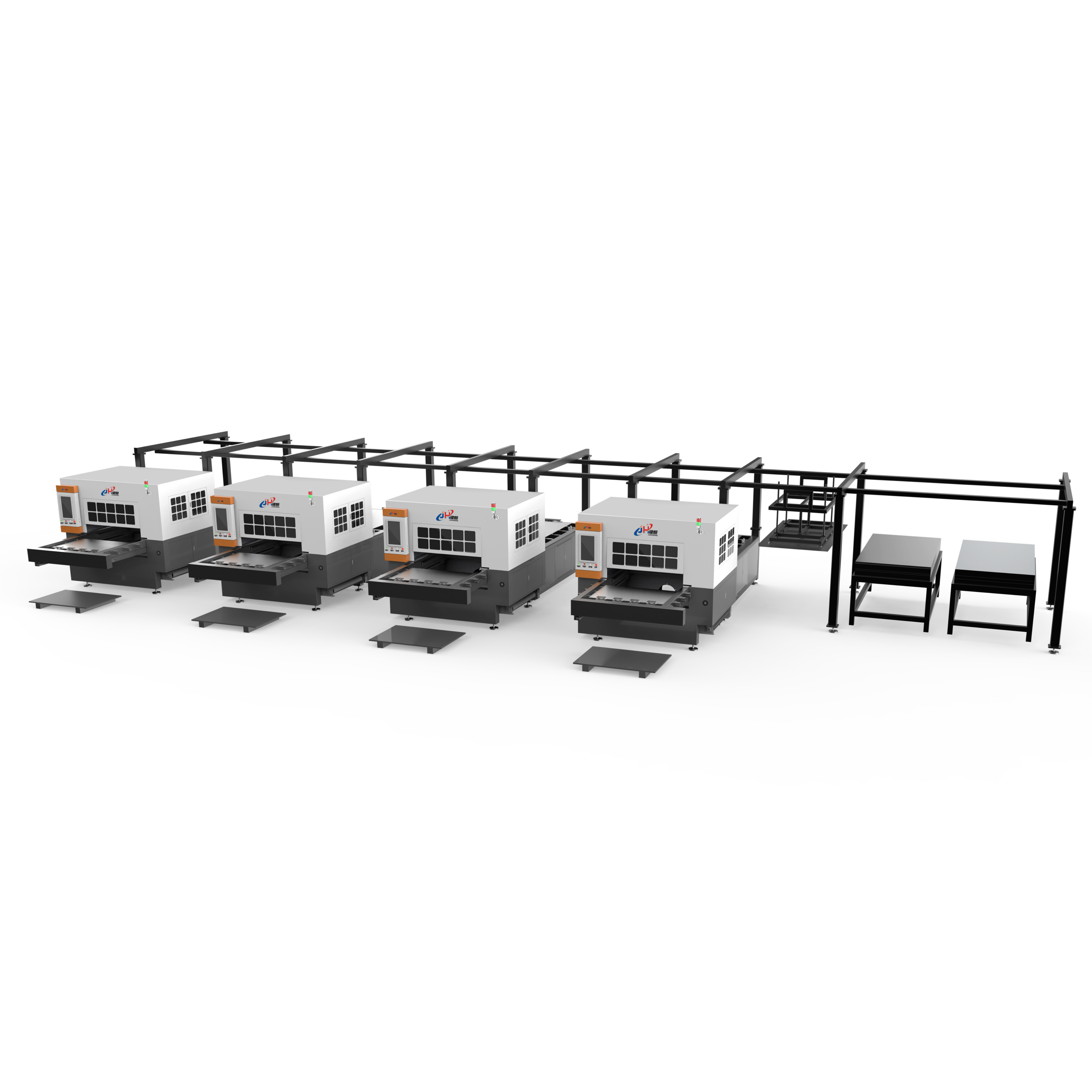
Laser Generation in Doped Fiber and Low-Loss Beam Delivery
Fiber laser cutting systems work by creating coherent light inside optical fibers doped with ytterbium. Pump diodes basically kickstart the process by exciting those rare earth ions until they emit a powerful beam. What makes these systems so efficient? Well, thanks to total internal reflection happening inside the flexible fiber, we're looking at under 25% energy loss when transmitting the beam - way better than what traditional CO2 lasers manage. The near infrared wavelength around 1.06 microns gets absorbed really well by most metals, which means the energy transfer happens pretty efficiently. And speaking of efficiency, the beam quality metrics here are impressive too (M squared values below 1.1). This results in minimal divergence, so the focused intensity stays strong even when working on longer distances between the machine and the material being cut.
CNC-Guided Motion Synchronization for Sub-Millimeter Positional Accuracy
Servo motors do most of the heavy lifting when it comes to precision cutting, turning those CAD designs into actual movement with pretty impressive ±0.05 mm consistency. Modern CNC systems aren't just moving parts around either they constantly tweak how fast and how hard the cutting head works while making sure the laser stays properly modulated for those complex shapes we all love creating. What really makes this setup shine is the real time feedback loop from those linear encoders. They catch any position drift almost instantly, keeping those kerf widths under 0.1 mm even when things are flying along at over 100 meters per minute. And let's not forget about the closed loop control system which basically gets rid of that annoying mechanical lag problem that plagues so many plasma cutting operations out there on shop floors today.
Non-Contact Ablation and Minimal Heat-Affected Zone (HAZ) Explained
Fiber lasers work by heating materials until they turn to vapor, all without touching them physically. The intense energy focus can reach around ten million watts per square centimeter, which quickly raises temperatures past what's needed for vaporization. At the same time, gases like nitrogen or oxygen blow away any melted material left behind. Most importantly, the heat doesn't spread far from where it's applied, staying within about half a millimeter of the actual cut area. This means there's roughly 80% less heat affected zone than when using plasma cutting methods. Because of this limited heat exposure, the microscopic structure of the material stays intact. For things like aircraft parts made from special alloys, this matters a lot since their ability to withstand repeated stress relies heavily on how well the crystal structure remains unchanged after processing.
Fiber Laser Cutting Machine vs. CO₂ and Plasma: Performance, Cost, and Use-Case Fit
Quantitative Comparison: Cut Speed, Energy Efficiency, and Cost per Meter
Fiber lasers outperform CO₂ and plasma systems across three core operational metrics:
- Cutting Speed: Up to 3× faster than CO₂ on thin metals (<6 mm), reaching 80 m/min.
- Energy Efficiency: 30–40% wall-plug efficiency—more than triple CO₂'s 5–10% and surpassing plasma's ~25%.
- Cost per Meter: Lower energy use and minimal maintenance reduce operating costs to $43/meter, versus $101/meter for CO₂ and $65/meter for plasma.
Strategic Exceptions: Where CO₂ or Plasma Still Make Sense
Despite fiber lasers' dominance in metal fabrication, CO₂ systems remain preferable for:
- Non-metal materials like wood and acrylic, where their 10.6 μm wavelength ensures superior absorption.
- Thick-section steel (25 mm), where plasma achieves higher throughput at acceptable tolerance levels.
Plasma retains relevance for:
- Field-based repairs of 30 mm materials, leveraging portability and lower capital investment.
- Low-tolerance applications where consumable costs offset fiber's long-term maintenance savings.
In aerospace structural fabrication, for example, plasma cuts 40 mm aluminum frames 20% faster than fiber lasers (Fabricators & Manufacturers Association, 2024). These exceptions reinforce that optimal tool selection depends on application-specific trade-offs—not blanket superiority.
Industry-Specific Advantages of Fiber Laser Cutting Machines
Aerospace & Medical: Ultra-Precise Titanium and Stainless Steel Processing
Fiber lasers have become essential tools for aerospace engineers working on titanium components for jet engines and airframes where tolerances must stay within ±0.05 mm. These tight specs matter because even small deviations can compromise structural integrity when these parts face extreme loads during flight. What makes fiber lasers so valuable is their ability to create almost no heat affected zone around the cut area. This preserves the metal's fatigue resistance properties even at operating temps exceeding 900°C, which regular machining methods simply cannot match. Moving over to medical applications, manufacturers use similar laser technology to produce stainless steel spinal rods with surface finishes smoother than 0.8 micrometers. Why does this matter? Because those microscopic imperfections left behind by traditional machining techniques actually promote bacterial growth on implant surfaces. According to recent findings published in Advanced Materials last year, doctors reported about a 22% drop in complications after switching patients from ground implants to ones made with laser cutting technology. The difference seems to come down to how lasers avoid creating those tiny fractures that happen during conventional grinding processes.
Automotive & Electronics: High-Throughput Production with Micro-Feature Integrity
Many automotive manufacturing facilities have started using fiber laser technology to produce chassis brackets and electric vehicle battery trays at incredible speeds over 80 meters per minute while maintaining position accuracy down to just 5 microns during non-stop 24 hour operations. The electronics sector benefits from these stable systems too, allowing manufacturers to precisely cut those super thin copper traces measuring only 0.1 mm wide on circuit boards without damaging nearby materials through heat exposure. For companies making micro connectors needed in self driving car sensors, consistent focus quality means around 95 percent of parts pass inspection on the first try. According to recent industry reports from 2024, factories that switched to fiber lasers saw their waste drop by roughly 30% when producing transmission components. This happens mainly because the edges come out clean and smooth right away, so there's no need for extra finishing work which cuts down individual part costs by approximately 18% overall.
Material Versatility and Future-Ready Integration
Safe, Stable Cutting of Highly Reflective Metals (Copper, Aluminum, Brass)
Fiber lasers have made real progress against long-standing reflectivity problems thanks to their ability to fine tune wavelengths between 1,060 and 1,080 nanometers. These adjustments cut down on dangerous back reflections by about 92 percent compared to traditional CO2 laser systems according to research from Laser Systems Journal in 2023. What this means is manufacturers can now cut copper, brass, and various aluminum alloys without needing special coatings. This matters a lot in industries like aerospace electronics manufacturing and semiconductor production where keeping materials pure and maintaining exact dimensions simply cannot be compromised. The actual cuts stay remarkably narrow too, typically less than 0.1 millimeters wide while losses from reflection stay comfortably below 0.3 percent throughout most operations.
Seamless Industry 4.0 Readiness: IoT Monitoring, Predictive Maintenance, and Smart Factory Interfaces
The latest fiber laser setups come equipped with built-in IoT sensors that keep an eye on around 15 different factors like gas pressure levels, lens temps, and variations in beam power output. All this info gets sent live to central monitoring screens where operators can track everything happening across the facility. With these smart sensors in place, maintenance teams can spot problems before they cause major issues, cutting down unexpected machine stoppages by roughly 45 percent according to recent findings from the Manufacturing Automation Report last year. Most modern systems work seamlessly with standard industrial software thanks to widely adopted communication standards such as OPC-UA and MTConnect. These connections make it possible to automate tasks like scheduling jobs, tracking materials throughout production runs, and managing resources efficiently even when plants operate without direct human supervision during off hours.
FAQ
What materials can fiber laser cutting machines effectively cut?
Fiber laser cutting machines can effectively cut metals such as stainless steel, titanium, copper, aluminum, and brass. They have also shown proficiency in dealing with highly reflective metals, thanks to their ability to adjust wavelengths.
How do fiber laser cutting machines compare with CO2 and plasma cutters?
Fiber lasers are typically faster and more energy-efficient than CO2 and plasma cutters for metals under around 25 mm. However, CO2 lasers are often preferred for non-metal materials like wood, while plasma cutters are suitable for thicker materials.
What industries benefit most from fiber laser cutting technology?
Industries including aerospace, medical, automotive, and electronics see tremendous benefits from fiber laser cutting, as it allows for highly precise cuts, minimal heat-affected zones, and high throughput production.

