
 EN
EN



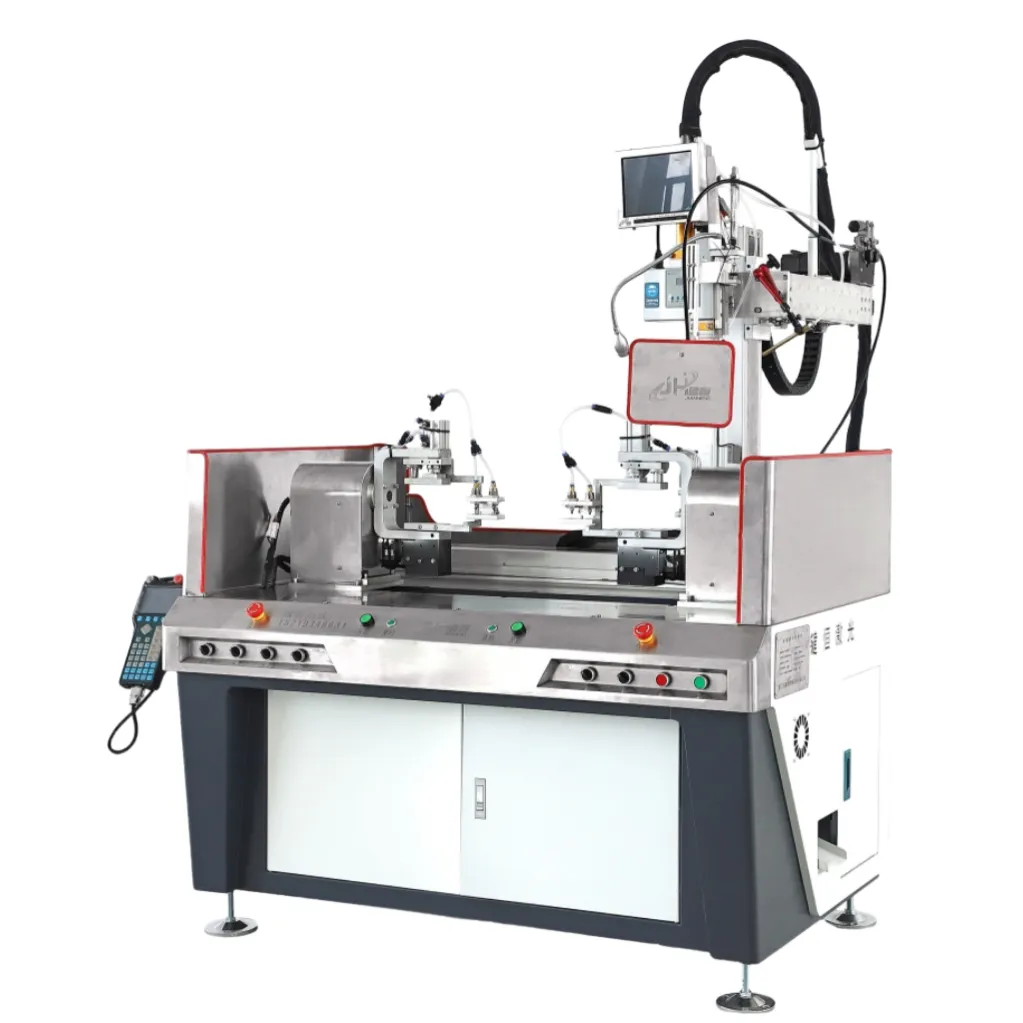
Why Automatic Laser Welding Machine Is Essential for Early-Stage Scaling
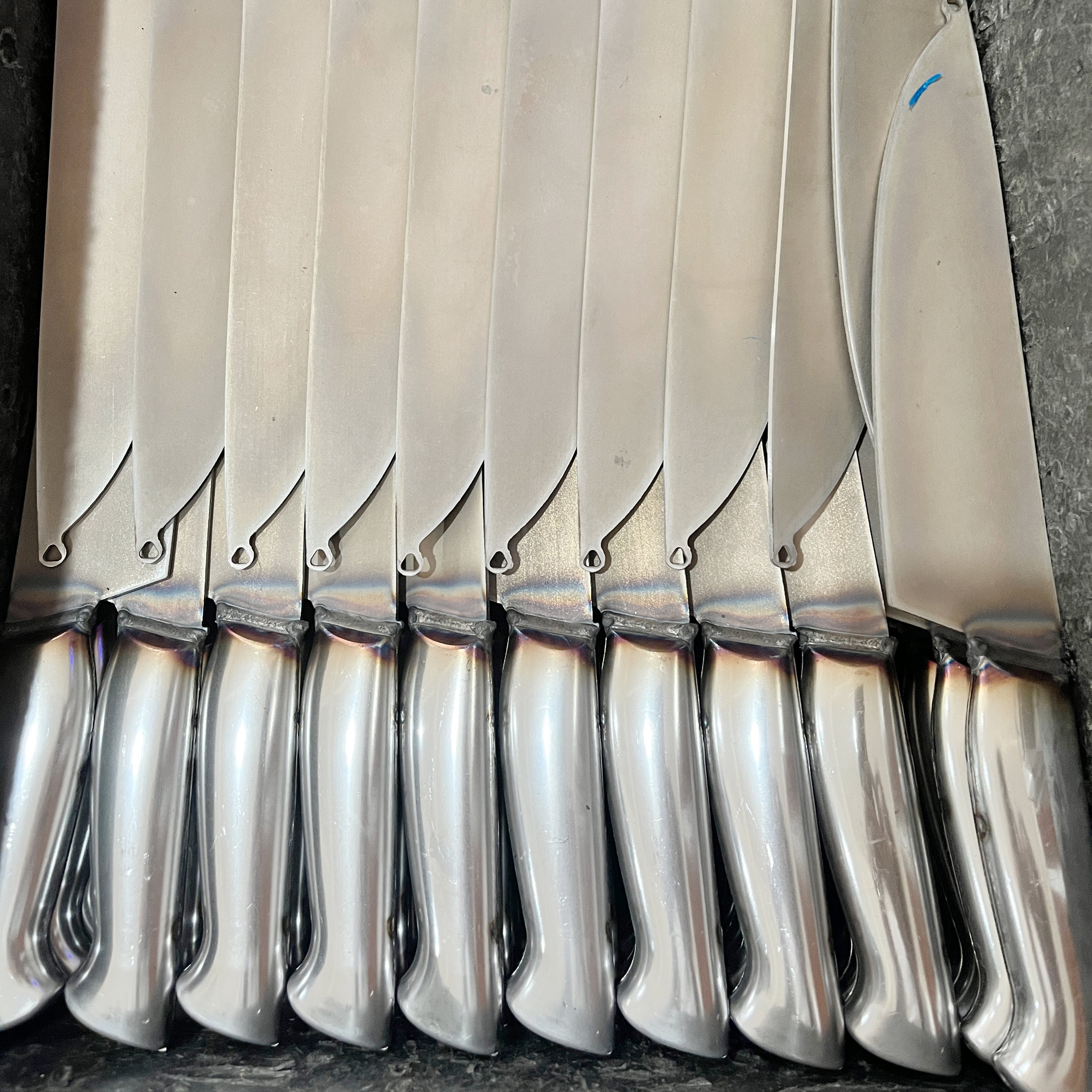
Overcoming manual welding bottlenecks in prototype-to-pilot transition
When moving from prototype to actual production runs, manual welding tends to become a major roadblock. People doing the welding work about 30% slower on average compared to automated systems, and there's often around 15% variation in dimensions between different units. This leads to expensive fixes later on and holds things up getting to market. Laser welding machines that run automatically solve these problems because they can be programmed for exact results. They let companies go smoothly from making one test piece to producing multiple units at once. The fact that these machines don't touch the materials during welding helps keep everything intact, plus they hit the same measurements down to 0.1mm every time. That kind of consistency is really important for complicated parts used in planes or medical equipment where even small differences matter a lot. For new companies trying to get off the ground, having this kind of system means they can check if their production methods will work without putting all their money into full scale manufacturing right away.
Key ROI drivers: precision, repeatability, and reduced operator dependency
Three factors dominate the ROI equation for scaling manufacturers:
- Precision: Laser beams achieve 50μm spot sizes, enabling hermetic seals on micro-components impossible with traditional methods
- Repeatability: Automated systems maintain ±0.05mm positional accuracy across 10,000+ cycles
- Operator reduction: Requires 70% fewer skilled welders while increasing throughput by 3x
The combination of these three technologies is changing how we think about labor costs in manufacturing. Manual welding work requires skilled technicians who charge around $45 per hour, but when companies switch to automated laser systems, they can scale production using machine operators paid closer to $20 an hour. What's more, closed loop monitoring cuts down on quality control expenses by roughly two thirds. When looking at electronics manufacturers moving their operations from small runs of just 100 units up to mass production levels of 10,000 units, most find that these changes pay for themselves within about a year. And there's another benefit too: getting rid of those costly human error defects which have been calculated to cost the industry approximately $740,000 every year according to research published by the Ponemon Institute in their 2023 report on quality defect costs in electronics manufacturing.
Designing Scalable Production Systems Around the Automatic Laser Welding Machine
From lab bench to production floor: modular cell architecture and layout planning
Moving from prototype welding to mass production needs modular cell designs that make everything fit together better. These ready-made units can switch back and forth between testing new ideas and running at full speed, which saves a lot of time getting things set up right. Good layout planning means parts don't have to travel far across the shop floor, plus keeps workers safe around those powerful lasers especially important for stuff like sensitive electronics or medical devices where even small mistakes matter a lot. When loading stations talk properly to the machines that come after them, the whole system runs smoother and nobody ends up fixing problems that should have been avoided in the first place.
Fixture, clamping, and part presentation strategies for high-mix flexibility
Universal fixturing systems accommodate diverse part geometries without retooling downtime. Vacuum-based clamping secures thin-gauge materials (<0.5mm) while avoiding surface deformation during high-precision welds. For mixed-production environments, robotic part-presentation arms with vision-guided alignment reduce changeover intervals to under 15 minutes—a key advantage when processing small batches.
| Strategy | Impact on Flexibility | Production Benefit |
|---|---|---|
| Modular Fixtures | 85% faster changeovers | Enables small-batch economics |
| Non-contact Clamping | Zero marring on sensitive alloys | Eliminates post-weld finishing |
| Adaptive Presentation | Handles ±15% dimensional variance | Reduces scrappage by 22% |
This approach maintains micron-level repeatability across product variants—essential for aerospace and EV battery welding where joint integrity directly impacts safety compliance.
Ensuring Consistent Quality and Uptime with Industrial-Grade Automatic Laser Welding Machine Integration
Industrial-grade automatic laser welding machines transform production reliability through embedded systems that preempt failures and maintain micron-level precision. Unlike manual methods, these solutions embed quality assurance into every weld cycle—critical for aerospace, medical, and automotive applications where defect rates below 0.1% are non-negotiable.
Real-time monitoring, closed-loop control, and predictive maintenance features
Sensors built right into the system monitor how deep the weld goes, check temperatures, and keep an eye on where the beam is pointing as everything runs. These readings get sent straight to the control system which makes adjustments on the fly. When things start to go off track because of heat warping or other issues, the system catches it fast before any real damage happens to the joints. Smart software looks at how parts are wearing down over time so maintenance can happen when there's already scheduled downtime available. Plants using this kind of setup see around 40 percent fewer unexpected shutdowns, and their welds stay within spec about 99.5 percent of the time even after thousands of cycles. Factory managers tell us their machines run about 30% longer between breakdowns, and they spend 60% less time fixing bad welds compared to older systems without all these smart features.
Strategic Partnerships and Smart Manufacturing Readiness
Selecting automation partners with scalable laser welding machine expertise
Choosing the right automation partner is critical when implementing automatic laser welding machines for production scaling. Prioritize providers demonstrating proven expertise in modular system architecture and multi-phase deployment strategies. Key evaluation criteria include:
- Technical capability to integrate welding systems with existing production lines
- Documented experience scaling throughput from pilot to full production
- Availability of responsive technical support teams
- Training programs addressing operator skill gaps
Partners with cross-industry implementation experience typically deliver 30% faster ROI through optimized workflow design and reduced integration downtime. Avoid vendors offering only standardized solutions—scalability demands customized approaches matching your specific production volume trajectory.
Preparing for Industry 4.0: data connectivity, digital twins, and adaptive welding
Integrating automatic laser welding machines with Industry 4.0 technologies transforms production agility through three core capabilities:
- Real-time data connectivity, enabling remote monitoring of weld quality metrics like penetration depth and seam consistency
- Digital twin simulations, modeling thermal dynamics to prevent distortion before physical welding begins
- Adaptive welding algorithms, automatically adjusting parameters based on material variations detected during processing
These technologies collectively reduce scrap rates by up to 22% while enabling rapid product changeovers. Implementation requires standardized communication protocols (OPC UA, MQTT) and cybersecurity measures protecting production data integrity.
FAQ
What is the main advantage of using automatic laser welding machines?
The main advantage is achieving high precision and repeatability, reducing errors, and increasing production efficiency. These machines require less skilled labor and are faster, making them ideal for scaling production from prototype to full runs.
How do automatic laser welding machines contribute to ROI?
Automatic laser welding machines improve ROI by reducing labor costs, minimizing quality control expenses, and eliminating human error defects. They also help scale production with lower overall costs compared to manual welding processes.
Why are modular cell designs important in scalable production systems?
Modular cell designs are important because they allow for easy scaling from prototype testing to full production without significant setup time. They ensure that the production flow remains efficient, reducing the movement of parts and potential safety hazards.
Can these systems be integrated with existing production lines?
Yes, selecting the right automation partners with experience in modular system architecture and multi-phase deployment strategies ensures that automatic laser welding machines can be effectively integrated with existing production lines, enhancing their capabilities.

