
 EN
EN



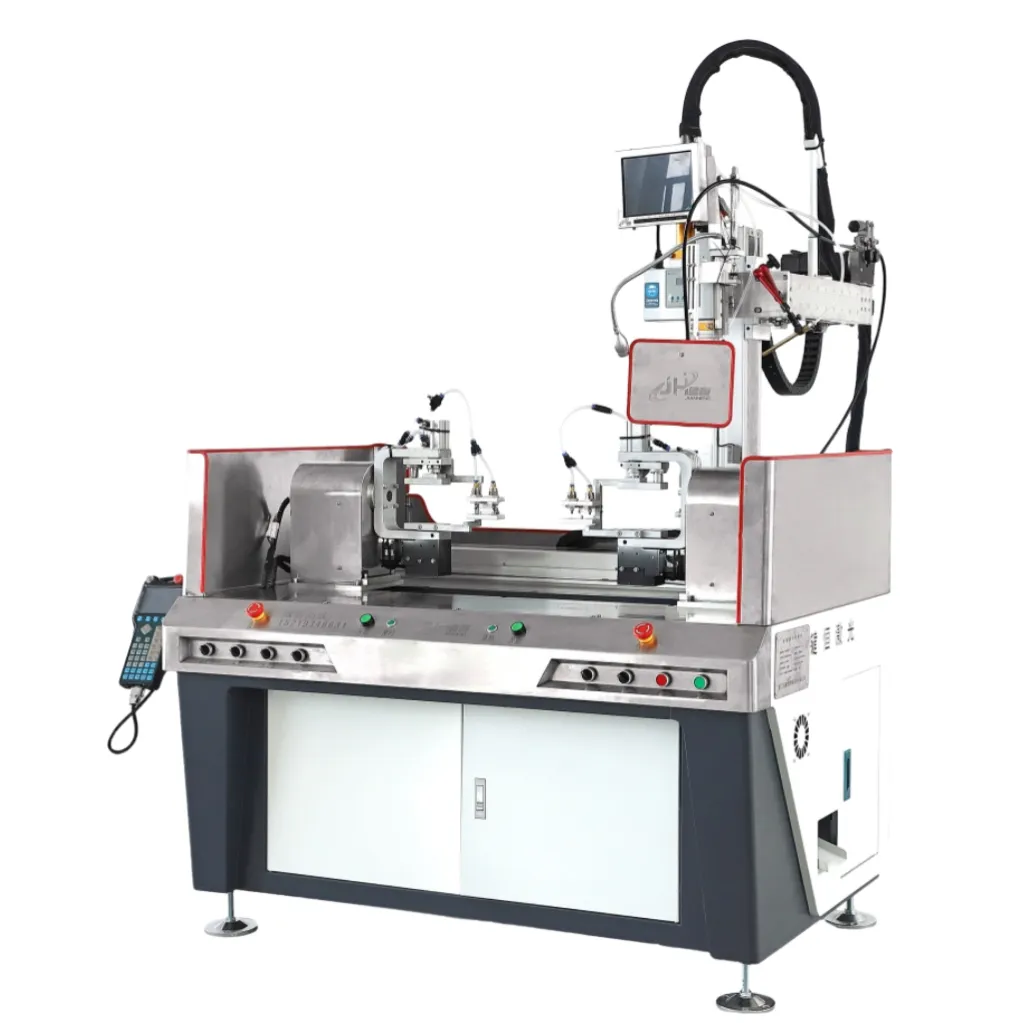
Why Automatic Laser Welding Machines Are Essential for Modern Fabrication
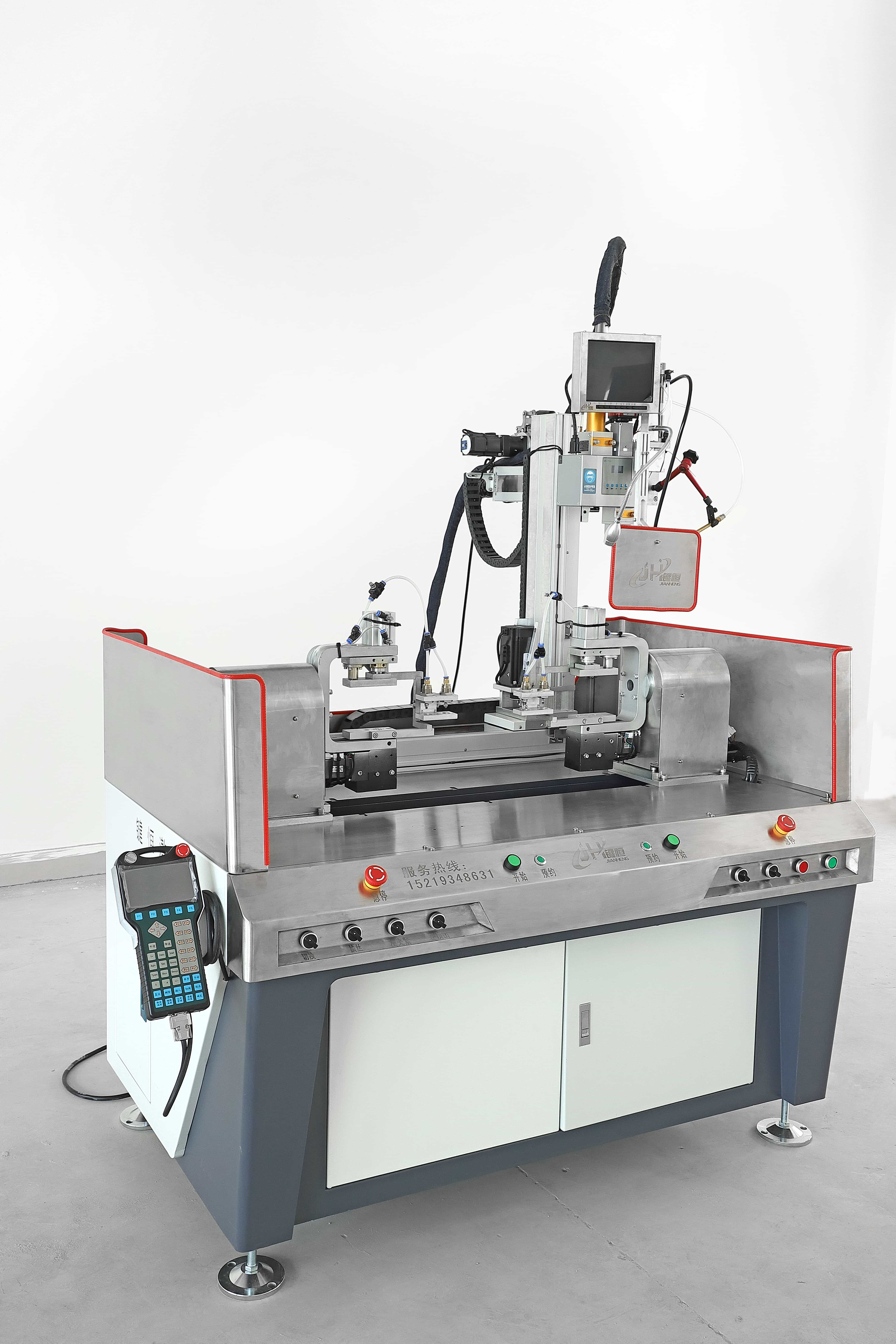
Meeting Industry 4.0 demands with scalable, data-enabled welding systems
Manufacturing needs to be agile and connected if companies want to keep up with Industry 4.0 standards. Traditional welding just doesn't cut it anymore when it comes to meeting those expectations. That's where automatic laser welding machines come in handy. These systems have built-in IoT sensors and run on real time analytics, so they can constantly check important welding factors like how deep the metal penetrates and whether the seams stay consistent throughout. All this information goes straight into MES platforms, which means operators can tweak processes instantly and maintain tight control over everything happening on the shop floor. According to Advanced Manufacturing Journal from last year, factories using these systems see about a quarter less unplanned downtime. What makes these laser systems stand out is their scalability factor. When product lines change, manufacturers can swap out robotic arms and adjust laser heads within hours instead of waiting weeks for setup changes. This flexibility works wonders for facilities dealing with multiple product variations at once. Plus, there's complete tracking from raw materials all the way to finished welds, with repeat accuracy below 0.1mm. For anyone serious about digital transformation in manufacturing, these laser welding solutions tick all the boxes required by modern industry standards.
Reducing long-term TCO through lower labor dependency and higher uptime
Automatic laser welding delivers significant total cost of ownership (TCO) advantages by minimizing labor dependency and maximizing operational uptime. Since these systems run continuously with minimal supervision, they reduce labor costs—60% of traditional welding TCO (Fabrication Cost Analysis 2023). Key contributors to savings include:
- 24/7 production capability: Eliminates inefficiencies tied to shift changes and operator fatigue
- Reduced rework: Near-zero spatter and distortion remove the need for post-weld grinding
- Energy efficiency: Focused laser beams consume 40% less power than arc welding
With non-contact processing there's no wear on consumables so machines stay running most of the time actually over 90% of the time according to industry reports. What does maintenance look like then? Mainly just keeping lenses clean regularly and doing some calibration checks every now and then. Manufacturing plants across North America have seen their total cost of ownership drop by around 35% after switching from traditional welding methods. And when we talk about production speed the difference becomes even more pronounced. Automated systems typically handle about three times as many welds per hour compared to manual operations. That kind of boost in productivity means companies recoup their investment much quicker than expected.
Precision, Quality, and Efficiency Gains from Automatic Laser Welding Machines
Laser welding machines bring a whole new level of accuracy to industrial fabrication work. These systems can hit sub millimeter precision even when dealing with mixed product runs on factory floors. What makes them so valuable is their ability to repeat the same weld over and over again without variation. According to some recent industry data from 2023, these machines cut down on dimensional errors by about half a millimeter compared to what workers can achieve manually. That means fewer parts need fixing or scrapping later on. The way they focus energy creates welds that are practically invisible to the naked eye. This matters a lot in sectors like aerospace engineering and medical equipment manufacturing, where how smooth and clean those welds look isn't just cosmetic but actually affects how well the final product functions under stress.
Minimal heat input, reduced distortion, and near-zero post-processing requirements
Automatic laser welding works by concentrating thermal energy into a very narrow beam, around 0.2 to 0.5 mm wide. This focused approach significantly reduces what's called the heat affected zone or HAZ, which helps prevent those annoying warping issues that often plague thin gauge materials. And let's talk about money here too. The precision of this method actually leads to real savings for manufacturers. Some companies have seen their grinding and polishing costs drop by as much as 85% compared to traditional welding techniques. Want to see exactly how these efficiency gains stack up? Check out the details in the table provided below.
| Performance Metric | Improvement | Impact |
|---|---|---|
| Distortion Reduction | Up to 90% | Eliminates straightening operations |
| Post-Processing Time | 70–85% decrease | Accelerates time-to-market |
| Weld Consistency | ±0.1mm tolerance | Increases first-pass yield rates |
Closed-loop thermal monitoring prevents burn-through on sensitive alloys like aerospace-grade aluminum, while adaptive optics maintain beam focus during complex curved-seam welding. Together, these capabilities reduce per-part production costs by 30–45% in high-volume runs (Fabrication Efficiency Report 2023).
Seamless Integration: Robotics, Materials, and Complex Geometries
Robotic Path Programming and Adaptive Motion Control for 3D Weld Seams
The latest developments in robotic path programming have enabled automatic laser welding systems to handle joints that used to be real headaches for manufacturers. These systems constantly monitor their work through real time feedback loops, adjusting torch angles and focusing distances as needed so weld beads land exactly where they should across complicated three dimensional surfaces. The adaptive motion controls keep penetration depths remarkably consistent at around plus or minus 0.1 mm, which works surprisingly well even when dealing with irregular shapes. This makes them perfect for high-stakes applications like building aircraft frames or crafting medical implants where defects simply won't do. Compared to old fashioned manual methods, modern systems hit an impressive 98 percent success rate on those tricky multi axis weld paths according to industry standards from 2023. That translates to roughly 40 percent fewer costly reworks down the line.
Reliable Performance on Challenging Materials: Aluminum, Stainless Steel, and Dissimilar Joints
Laser welding works really well on all sorts of materials because it can adjust both wavelength and how long each pulse lasts. Take those tricky aluminum alloys used so much in electric vehicle battery trays for instance. The controlled way we input energy stops things from burning through but still gets that good fusion effect. When putting together different kinds of metal such as copper and stainless steel, managing the heat just right helps avoid creating those brittle spots between them. Manufacturers making hydrogen valves know this matters a lot since they need seals that won't leak even a tiny bit – something around 1 times 10 to the minus nine mbar liters per second basically. And there's another plus too: getting rid of extra steps means the whole process takes about half the time it would with traditional TIG welding methods.
Future-Ready Capabilities: Smart Features Driving Next-Gen Automation
Real-time weld monitoring, AI-powered defect detection, and closed-loop process control
The latest generation of automatic laser welding machines comes equipped with smart systems that completely change how quality is controlled during manufacturing. These machines have sensors that pick up tiny changes in the weld pool shape and seam alignment, allowing for quick tweaks to the laser settings as needed. The system constantly monitors what's happening and can stop problems like tiny air pockets or incomplete penetration almost instantly. Smart software looks at heat patterns and how materials react, often catching potential issues before they actually happen. Industry data shows this cuts down waste by around 40% in many cases. The equipment automatically adjusts power levels and focuses the laser depending on how thick the material is, maintaining pretty much exact measurements (within about 0.1mm) even when running non-stop. What makes these systems so valuable is their ability to run themselves without constant human checks. Factories report needing 90% less manual inspection after implementing these technologies. For industries like aerospace and medical device manufacturing where there's absolutely no room for error, this kind of precision just isn't optional anymore.
FAQ
What are the benefits of using automatic laser welding machines?
Automatic laser welding machines provide benefits such as reduced labor dependency, higher uptime, improved precision, and significant total cost of ownership advantages, making them essential for modern manufacturing processes.
How do automatic laser welding machines integrate with Industry 4.0 standards?
These machines come with IoT sensors and real-time analytics, feeding data directly into MES platforms, enabling instant process adjustments and maintaining control over the manufacturing process.
What kinds of materials can be welded using automatic laser welding machines?
Automatic laser welding machines are capable of welding materials like aluminum, stainless steel, and dissimilar joints, making them versatile for various applications.
How do these machines minimize dimensions errors and post-processing requirements?
Automatic laser welding machines achieve sub-millimeter precision with minimal heat input, resulting in reduced distortion and significantly decreased post-processing requirements.
Why are these systems considered future-ready?
Equipped with smart features such as real-time weld monitoring, AI-powered defect detection, and closed-loop process control, these systems enhance quality control and efficiency, positioning them as vital tools for next-gen automation.

